Big feelings are a normal part of preschool and PreK classrooms, but that doesn’t make these feelings easy to navigate, whether for kids or for the educators guiding them. The good news? Self-regulation is a skill, not a personality trait. Just like learning to tie shoes or write their names, children can learn, step by step, how to notice a big feeling and bring their bodies back to calm.
Below are five easy, classroom-tested techniques based on evidence-based practices found in the Every Child Ready (ECR) early childhood curriculum that you can start using today.
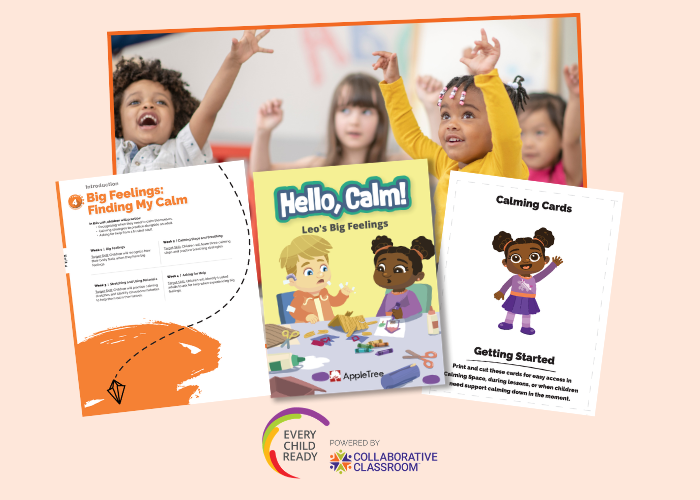
Want to put these strategies into practice? Download our free Big Feelings: Finding My Calm lesson pack for step-by-step activities that help children build self-regulation skills.
1. Teach Kids to “Read” Their Bodies First
Before a child can calm down, they need to notice they’re revving up. Big feelings show up in the body long before they show up as a meltdown: a racing heart, a fluttery tummy, hot cheeks, shaky hands, or fast breathing.
Try this: Turn body-noticing into a game. Ask, “What does your heart do when you’re excited?” Then ask, “What does your tummy feel like when you’re nervous?” Have the children share and even act out their answers (perhaps during morning meeting or as a transition activity). Naming these physical cues gives kids an early-warning system—and an early-warning system is the first step toward self-regulation.
2. Introduce a Simple 3-Step Calming Routine
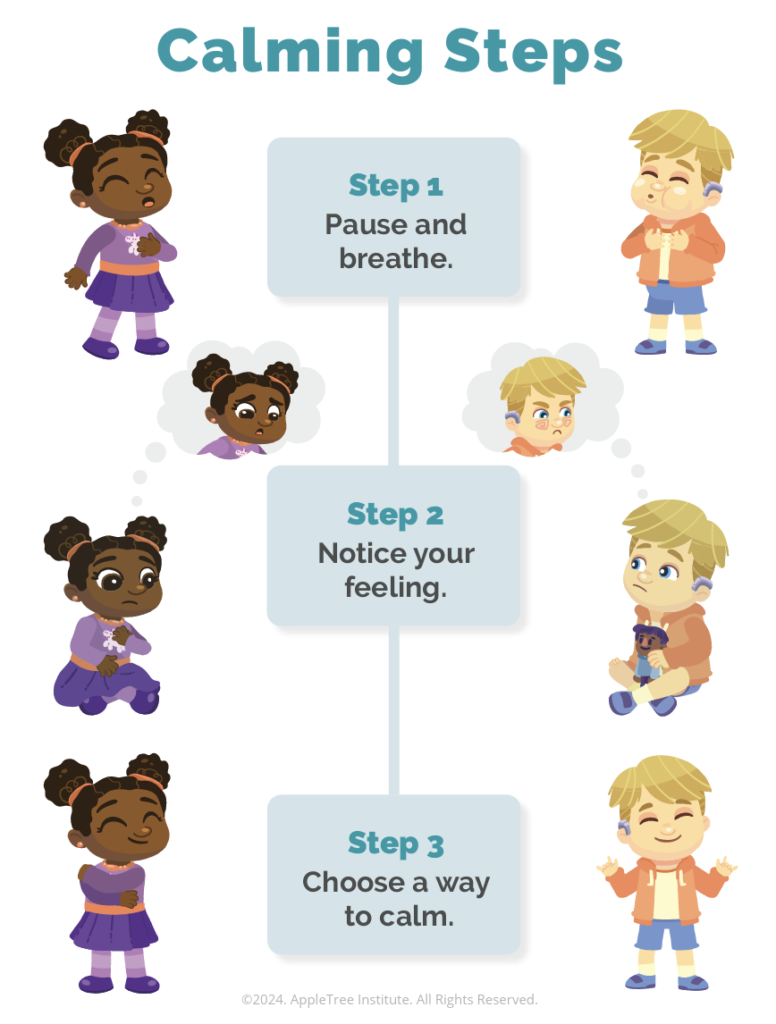
Kids do best with calming steps that are predictable and repeatable. A simple sequence like Pause and Breathe → Notice How I Feel → Choose a Way to Calm My Body gives children a script they can lean on, even when they’re too upset to think clearly.
Post a visual reminder (like a simple poster with icons) somewhere kids can see it—by the circle time rug, near the cubbies, or in a designated calm-down corner. Visual cues do a lot of heavy lifting when a child’s brain is too flooded to process spoken directions.
3. Have Them Practice Breathing Before They Need It
“Take a deep breath” only works if a child has practiced it dozens of times before they’re upset. Make breathing playful and multisensory:
- Smell the flower, blow out the candle: inhale through the nose, exhale through the mouth
- Balloon belly: breathe in and imagine a balloon inflating in the tummy
- Row the boat: move the arms in a rowing motion while breathing in and out
Build these into moments you already have: during circle time, right before or after transitions, or as a settling ritual before naptime or story time. A minute or two of practice, a few times a day, is what turns “Take a deep breath” from an empty phrase into a skill kids can actually reach for when they’re upset.
4. Build a Calming Toolkit
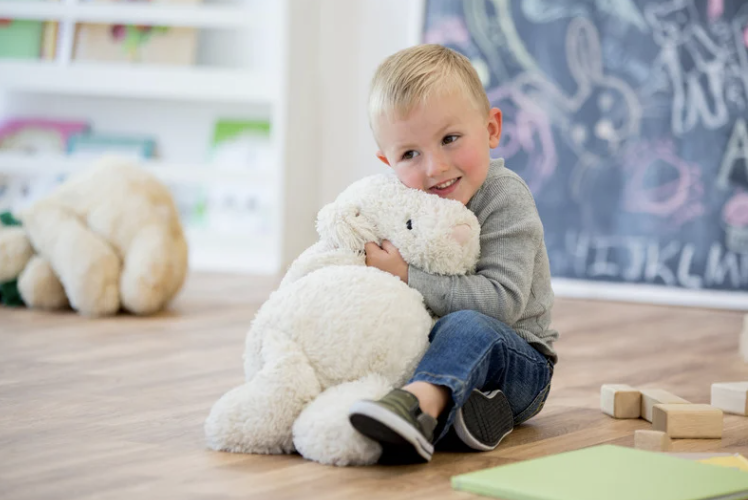
Different kids self-soothe in different ways—and that’s a good thing to normalize early. Set up a simple calming station with a handful of low-cost items: a soft stuffed animal to hug, a squeeze ball for busy hands, a favorite board book, or paper and crayons for drawing out big feelings.
Introduce the toolkit during a calm moment—like circle time—so each item feels familiar before a child ever needs it. Let kids test out a few options and notice out loud what helps them: “Squeezing the ball helps my hands feel calm” or “Hugging the bear makes me feel safe.” That way, when big feelings hit, reaching for a tool is already a known routine, not a new idea.
5. Normalize Asking for Help
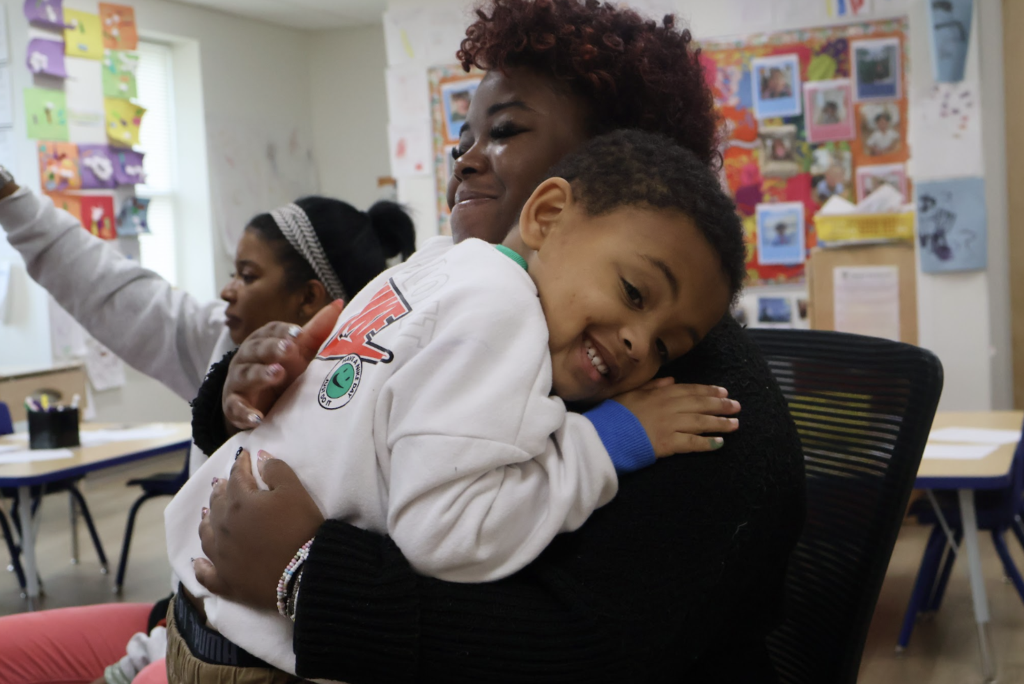
Self-regulation doesn’t mean kids have to calm down alone. Teach simple phrases like “I need help” or a hand signal they can use when words are hard to find. Knowing that a trusted adult will help them regulate—not judge or rush them—is often what makes the other strategies actually work.
The Takeaway
Self-regulation isn’t about kids never having big feelings. It’s about teaching them the skills to move through those feelings safely. Small, repeated practice—not just in-the-moment fixes—is what turns these strategies into lifelong skills.
Learn More: Explore the Every Child Ready Curriculum
The “Big Feelings: Finding My Calm” lesson pack is excerpted from the comprehensive Every Child Ready preschool and PreK curriculum and reflects the program’s high-quality, developmentally appropriate, and play-rich instruction.