
As students move into the upper grades, the texts they encounter become increasingly complex—and reading becomes essential to learning across every subject.
For students with gaps in foundational reading skills, this shift can make subjects like science, history, and even math more difficult.
Identifying reading difficulties and gaps in foundational skills early is essential. If you notice signs of reading difficulty, it’s important to get students the support they need as quickly as possible.
Here are some intentional classroom practices that can help students access complex texts while they continue developing their reading skills.

Why Upper-Grade Texts Can Be Challenging
As students encounter more sophisticated content, the texts they read often become more complex. Unlike many narrative texts, science, history, and other content-area texts often introduce several layers of complexity:
- Tier 2 and Tier 3 Vocabulary: Words like analyze, impact, and compare (Tier 2) are important for comprehension across subjects. Subject-specific terms such as photosynthesis, revolution, and amendment (Tier 3) are critical to understanding content but may be unfamiliar to students.
- Complex Sentence Structures: Scientific and historical texts often use long, information-dense sentences that require students to hold multiple ideas in mind and determine how those ideas relate to one another.
- Background Knowledge Assumptions: Content-area texts may assume students already understand historical events, scientific concepts, or other background information, creating additional barriers for students who have not yet developed that knowledge.
- Cognitive Load: For striving readers, decoding unfamiliar words can require significant mental effort. When so much attention is devoted to figuring out the words on the page, less attention may be available for comprehension and analysis.

What Older Striving Readers Need
Striving readers need access—not alternatives.
That means providing the same rich, grade-level science, history, and other content while putting appropriate scaffolds in place to help students successfully engage with complex texts.
Here are practical classroom strategies that can help.
1. Pre-Teach Key Vocabulary
Before beginning a new unit, identify a small number of critical Tier 2 and Tier 3 vocabulary words that students will need to understand the content. Explicitly teach the words using student-friendly definitions, examples, visuals, and opportunities for students to use the words in context.
Try This: Create a shared vocabulary resource for the unit and return to key terms as students encounter them in readings, discussions, and writing. Focus on the words that are essential to understanding the content rather than trying to pre-teach every unfamiliar word.
2. Chunk the Text—and the Task
Complex texts can become more manageable when students work through them in meaningful sections rather than attempting to process an entire passage at once.
Try This: Divide a complex section into manageable chunks and give students a specific purpose for reading each one. Ask students to identify the central idea, explain a key relationship, determine the significance of a detail, or consider how evidence supports an author’s claim.
3. Model Reading Through Read-Alouds
Reading aloud isn’t just for younger students. When teachers model fluent reading of grade-level texts, students can hear how phrasing, intonation, and attention to meaning support comprehension.
Teacher modeling can also make the thinking involved in reading complex texts more visible. Students can hear how an experienced reader approaches unfamiliar vocabulary, unpacks a difficult sentence, connects ideas, and monitors their own understanding.
Try This: Select a short, challenging passage and read it aloud while students follow along. Pause at strategic points to model how you make sense of unfamiliar language, connect ideas, or use context to clarify meaning.
4. Use Graphic Organizers for Sense-Making
Graphic organizers can help students identify relationships among ideas and make the structure of complex information more visible.
The best organizer will depend on the content and the thinking students are being asked to do. Cause-and-effect charts can help students analyze relationships in science or history, while comparison charts can help students examine similarities and differences between concepts, events, or texts.
Try This: Choose an organizer that matches the thinking required by the text. Rather than simply asking students to record information, use the organizer to help them explain relationships, identify patterns, or organize evidence.
5. Support Learning Through Speaking and Writing
Students need opportunities to process complex texts through speaking as well as reading. Structured partner talk, small-group discussion, and whole-class conversation can give students opportunities to clarify their thinking and learn from their peers.
Short, structured writing tasks can then help students organize and deepen their understanding.
Try This: Ask students to explain a historical cause-and-effect relationship using evidence from the text. Have them cite specific details to support their explanation and discuss how one event or decision contributed to another.
Don’t Forget Foundational Skills: Where SIPPS Comes In
Classroom scaffolds can help students access grade-level content, but they can’t replace explicit instruction when students have significant gaps in foundational reading skills.
Older students who continue to struggle with decoding need effective, research-based reading intervention that helps them develop the skills they need to read increasingly complex texts independently.
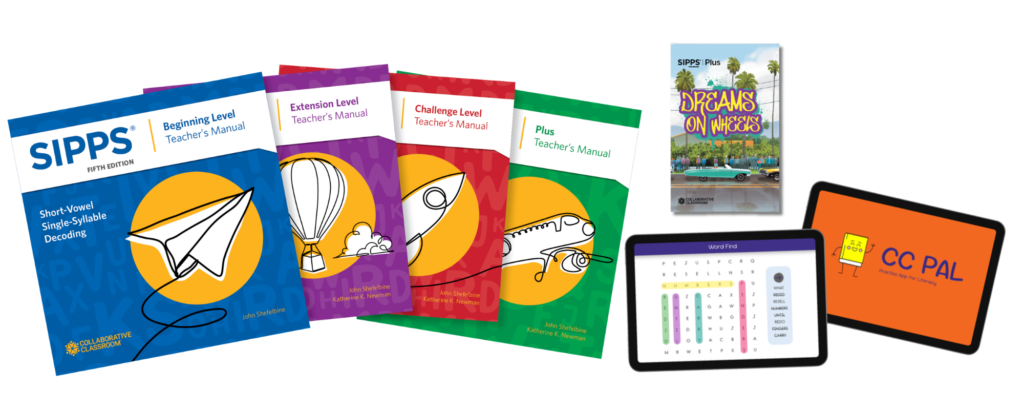
SIPPS® provides structured, research-based foundational reading instruction designed to help striving readers develop the decoding skills they need for greater reading accuracy, fluency, and independence.
When students receive consistent foundational skills instruction alongside content-area supports, they can work toward becoming more independent readers while continuing to engage with the grade-level content they need to learn.
SIPPS Plus and Challenge are designed to work together to support older striving readers, with age-appropriate instruction and engaging texts that are relevant to students at these grade levels.
Download the SIPPS for Older Readers Digital Sample Kit to explore the program and see how SIPPS supports older students who need additional foundational reading instruction.
Explore SIPPS for Older Readers
Learn how research-based foundational skills instruction can support students who need additional reading intervention.