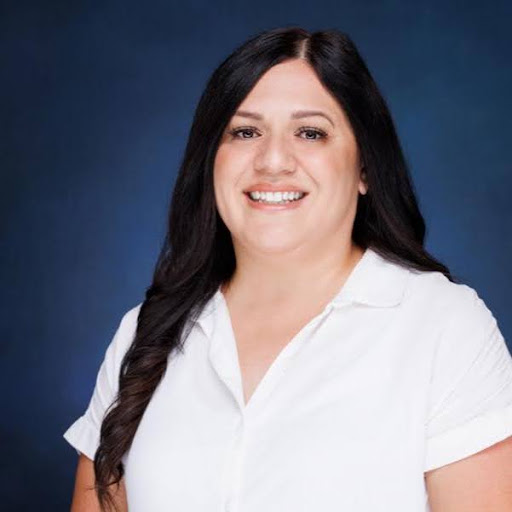
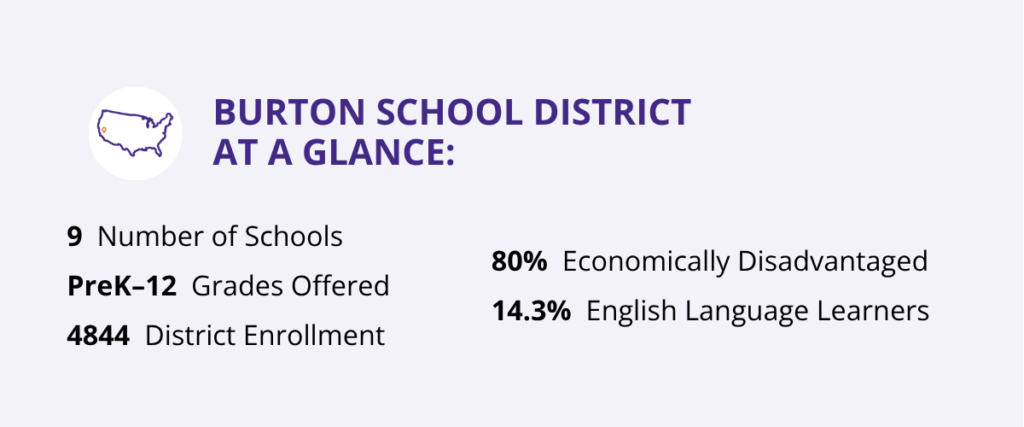
Cristina Ambriz is the Curriculum Coordinator for Burton School District in Porterville, California (Tulare County). Burton serves a diverse group of students with a wide range of academic, social-emotional, and learning needs.
Like many districts, they see students enter school with varying reading abilities and foundational skill gaps. Some may need additional support with phonemic awareness, decoding, phonics, and fluency, while others may have experienced years of difficulty with reading. To support every student who struggles with reading, they chose SIPPS®.
Ambriz previously worked as a Reading Intervention Teacher on Special Assignment (TOSA), supporting students who needed additional instruction and intervention in literacy. Those experiences gave her a strong understanding of both classroom instruction and the systems needed to support student achievement.
She’s especially passionate about literacy and ensuring that students develop the foundational reading skills they need to become confident, independent learners. Her goal is to help create equitable learning opportunities for every student while at the same time making sure educators are supported with effective, research-based instructional practices.
As Burton’s Curriculum Coordinator, she has the opportunity to collaborate with teachers, administrators, and staff to strengthen curriculum, instruction, and assessment practices across the district.
Why Burton School District Chose SIPPS
Burton became interested in SIPPS through their search for a systematic, explicit, and evidence-based approach to support students who were struggling with reading. And while serving as a Reading Intervention TOSA, Ambriz saw firsthand that some students needed more intensive, targeted instruction in foundational reading skills. The structured SIPPS approach aligned well with the district’s goal of strengthening phonics, decoding, and fluency while meeting students at their instructional level.

Burton School District is committed to providing students with meaningful learning opportunities and ensuring that all students have the support they need to be successful.
How the Implementation Process Has Unfolded at Burton
Burton has been implementing SIPPS since 2021. They began using it primarily as an intervention for students who needed additional support in foundational reading skills. Their use of the program expanded as their experience with the program grew. They developed more consistent systems around identifying students, providing intervention, monitoring progress, and supporting teachers.
Implementation has been a collaborative effort. They’ve worked to build staff understanding of the program, provide professional learning and coaching, and ensure that SIPPS is used consistently and with fidelity. As the Curriculum Coordinator, Ambriz now has the opportunity to support the broader implementation and help connect the intervention work to district-wide literacy goals.
How Burton Set Themselves Up for Success
One of the most important factors was having a clear understanding of which students needed SIPPS and why. Ambriz and the district wanted the program to be part of a larger intervention system rather than simply another resource.
They also prioritized professional learning and teacher support. Giving teachers time to understand the routines, practice the lessons, ask questions, and receive coaching helped build confidence and consistency. Establishing clear expectations around lesson delivery, student placement, progress monitoring, and intervention schedules was also important.
Having staff who were committed to literacy intervention and willing to collaborate made a significant difference. They focused on using student data to make decisions and regularly reflecting on what was working and where students needed additional support.
What’s Most Appreciated About SIPPS
What Ambriz appreciates most about SIPPS is its systematic and explicit approach to foundational literacy instruction. In her own words: “The lessons provide a clear progression of skills and routines, which makes it easier to ensure that students receive consistent instruction and have opportunities to practice what they’re learning. I also appreciate that the program allows us to meet students where they are and provide targeted instruction based on their specific needs”.
Teachers appreciate the structure and predictability of the lessons. The routines make it easier for teachers to focus on instruction rather than having to develop intervention lessons from scratch. They also appreciate the opportunities for students to practice skills repeatedly and build confidence over time.
The routines make it easier for teachers to focus on instruction rather than having to develop intervention lessons from scratch.
Most importantly, everyone appreciates seeing students who’ve struggled with reading begin to experience success. What makes the work meaningful for both teachers and students is when students start to recognize patterns, decode words more confidently, and see themselves as readers.
How SIPPS Has Affected Learning and Engagement
There’s a noticeable increase in student confidence and engagement as they begin to experience success with reading. The systematic routines and consistent practice help students understand what’s expected of them and allow them to build their skills step by step. For students who’ve struggled with reading, seeing their own progress can be especially motivating.
Teachers have noticed growth in students’ ability to apply phonics skills when decoding unfamiliar words, as well as increased confidence and independence. They also appreciate being able to clearly see what students know, what they’re still working on, and where additional support is needed. The consistency of SIPPS has helped teachers feel more intentional and focused in their intervention instruction.
The systematic routines and consistent practice help students understand what’s expected of them and allow them to build their skills step by step.
How SIPPS Has Shifted Teaching Practices and Professional Learning at Burton
SIPPS has helped strengthen focus on explicit, systematic literacy instruction throughout the district. It has encouraged teachers to be more intentional about the sequence of skills, the amount of guided practice students receive, and the importance of providing immediate feedback.
It has also influenced professional learning by creating opportunities for teachers to talk more deeply about foundational reading skills, student data, instructional routines, and intervention practices. Rather than simply asking whether a student is struggling, educators are better able to ask what specific skill the student needs and what instructional response will best support that need.
Why Ambriz Would Encourage Other Districts and Schools to Try SIPPS and Stay the Course
Ambriz was one of the people who piloted SIPPS, and as she says, “I’ll be honest. At first, I felt like I was teaching like a robot.” Because the routines are very structured, it took some time to understand how all of the pieces would come together and translate into student growth.
Over time, however, she began to see the value in those routines. What initially felt repetitive and overly structured became one of the strengths of the approach. The consistency and predictable routines are incredibly helpful for students, especially those who’ve struggled with reading. Students know what to expect and have frequent opportunities to practice while building their confidence and skills.
Her biggest piece of advice? “Trust the process. Give teachers the training and support they need, allow them time to become comfortable with the routines, and give the approach a fair opportunity to work. It may feel different at first, but the structure is intentional and serves an important purpose.”
Trust the process. Give teachers the training and support they need, allow them time to become comfortable with the routines, and give the approach a fair opportunity to work.
Ambriz also advises patience with the implementation. The payoff is seeing students make progress, become more confident readers, and develop skills that will support them far beyond the intervention setting.
Related:
Webinar: Inside the SIPPS Difference: K–12 Reading Acceleration That Actually Works
Blog Posts:
Effective Reading Intervention: What Research Says and How SIPPS Brings It to Life
How Stockton’s Superintendent Is Leading Change for Reading Achievement