Universal screener mandates across the country have prompted many of us to reevaluate our choices—from interventions to supplemental resources—as we plan budgets, staffing, and other support systems for students within a Multi-Tiered System of Supports (MTSS) framework.
We were recently joined by Linda Diamond, an expert in the field of literacy. She is the former founder of CORE and coauthor of the Teaching Reading Sourcebook. Linda helped our California team navigate the universal screener mandate and its implications.
In a previous blog post, Diamond unpacked the different types of assessments and highlighted what a screener is, what it is not, and what a large number of students showing risk of reading difficulty might actually mean: that your Tier 1 instruction is not working.
In this blog, we discuss how screeners help leaders assess the health of their MTSS. Additionally, we consider what questions leaders should ask themselves when evaluating the effectiveness of their Tier 1 instruction.
Using Screener Data to Assess the Health of Your MTSS Model
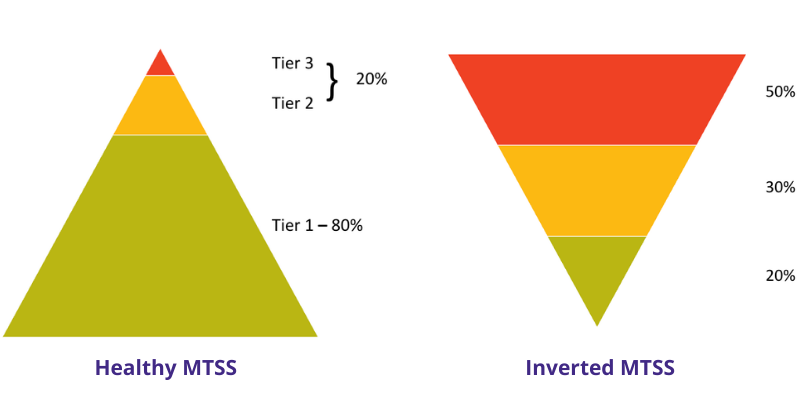
Using the MTSS pyramid as a visual guide, if your screener results show that less than 15 to 20 percent of students are identified as at risk, this is a sign of a healthy Tier 1. Those students who need support can be served through targeted, intensive Tier 2 or Tier 3 interventions. Ideally, one that is aligned with Tier 1.
If the pyramid is inverted and too many students are at risk, it may be time to stop. Take the time to evaluate your Tier 1 instruction.
If large numbers of your students require Tier 3 intervention, this data might be signaling that your Tier 2 instruction needs to be more intensive, explicit, and, in most cases, aligned with your Tier 1.
Possible Causes for Tier 1 Problems
In an unbalanced MTSS model, the problem often lies in non-evidence-aligned practices or materials. Or, there could be insufficient training and support to implement an evidence-aligned curriculum.
Effective Tier 1 instruction is explicit, differentiated, and aligned with the science of reading. It builds both word recognition and language comprehension. It has built-in checks for mastery and authentic opportunities to read, write, and discuss. Without this foundation, interventions alone will not solve the problem.
Ensure your curriculum includes each of these elements:
- Explicit and systematic instruction in the research-confirmed components necessary to learn to read
- Modeling and clear explanation
- Guided practice and checks for understanding
- Built-in monitoring to ensure mastery of skills taught
- Regular, spaced, cumulative, and independent retrieval practice with corrective feedback to reinforce and retain skills learned
- Differentiated instruction delivered in Tier 1—not just in Tiers 2 and 3—through targeted, skill-based small groups
- Frequent active response opportunities
If your curriculum lacks any of the above, that is an indicator that your Tier 1 instruction is lacking an essential component.
Conversely, if your curriculum aligns with all of these criteria, then you are implementing a program that is aligned with the science of reading and with learning science and effective instruction. So if you have an unbalanced MTSS model with poor screener results, the issue likely lies in the implementation of the curriculum and a need for comprehensive training and ongoing support.

How to Ensure Alignment Across Tiers of Instruction
When reconsidering a new Tier 1 program it is essential that you consider the alignment with Tier 2 and Tier 3 interventions.
To create a seamless learning experience for striving students, the difference between the tiers should not be the what (the content or the system) but the how:
- Smaller group sizes to allow for immediate, individualized feedback
- A pace tailored specifically to student mastery rather than a fixed calendar
- More explicit explanations that break down complex concepts into smaller, manageable bites
- Significantly more opportunities for practice to ensure that skills move into long-term memory
By keeping the instructional foundation consistent across the building and simply “turning up the volume” on intensity, you ensure that intervention supports Tier 1 rather than complicating it.

Being a Reader and SIPPS: Designed to Work Together
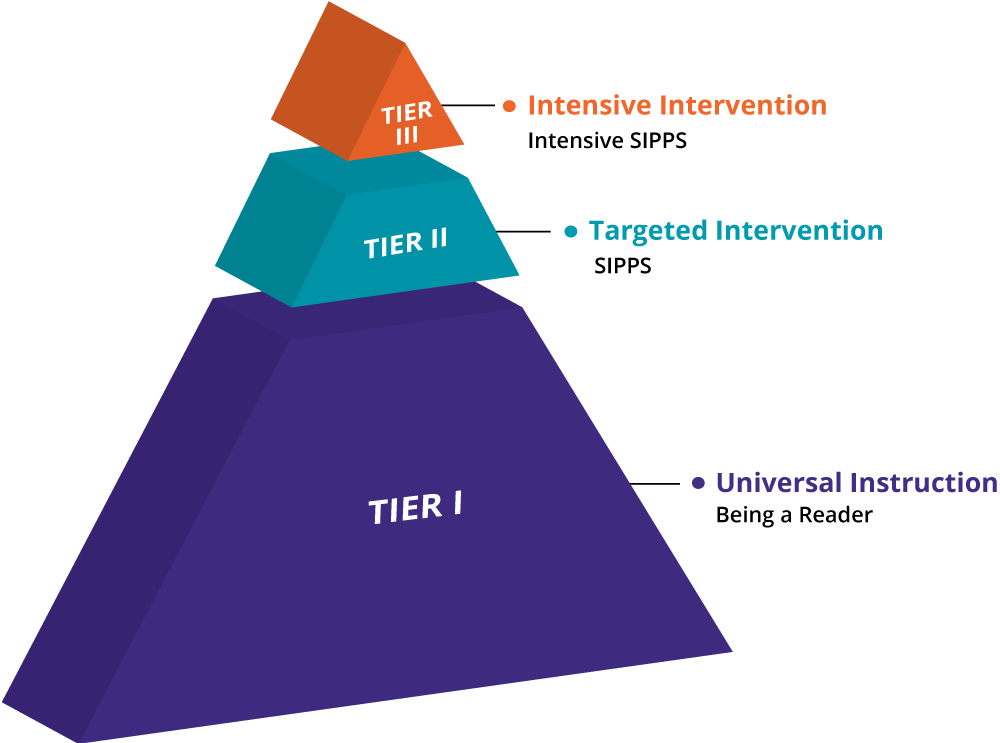
Using Being a Reader™ for Tier 1 and SIPPS® for Tiers 2 and 3 creates a cohesive MTSS model. As a bonus, these programs include the shared independent practice app, CC PAL. This program partnership is built on a shared instructional strategy and a common scope and sequence.
Because the programs use the same routines, instructional language, and mnemonic spelling-sound cards, students never have to navigate competing phonic systems. This consistency reduces cognitive load, allowing struggling readers to focus on mastery rather than translating between two different programs.
Proper Implementation Is Key to Success
Even the most well-researched, evidence-based curriculum can fall short if it is not implemented the way it was designed to be taught.
Effective literacy programs build skills in a very specific, cumulative way. Therefore, when teachers skip sections, change the order of lessons, or substitute materials, they risk disrupting the program’s intended flow and effectiveness. They can create a gap in a student’s foundational knowledge, causing problems later on. The best way to ensure that a high-quality curriculum is implemented with fidelity is to provide teachers with comprehensive training. This, along with ongoing support and feedback, help them refine their practice.

Surrounding Teachers with a System of Support
At Collaborative Classroom, we know that how we teach matters as much as what we teach.
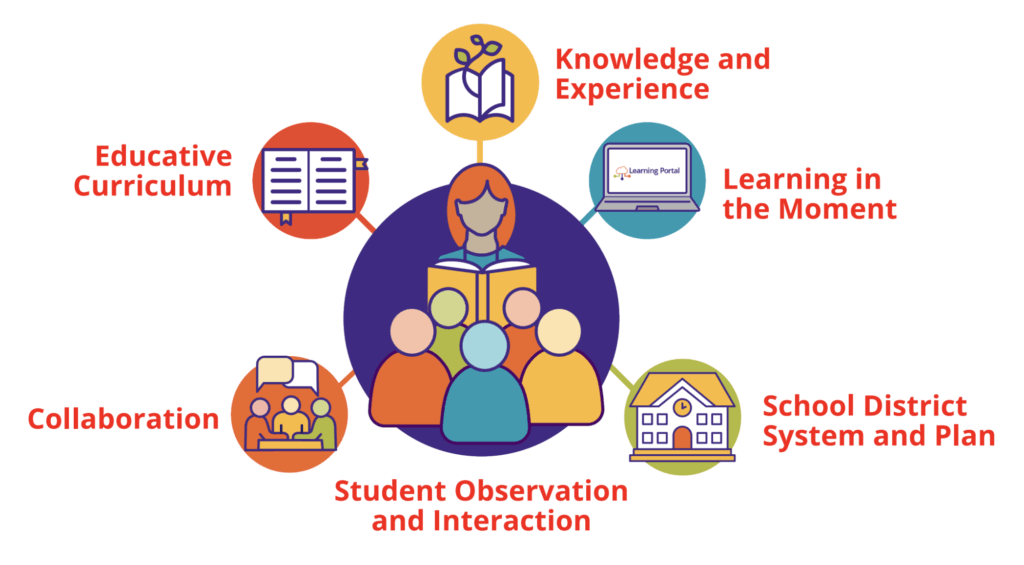
Our curricula and professional learning empower educators to take charge of instruction and learning through embedded and digital resources, along with a variety of professional learning pathways designed to fit any schedule.
Each of our programs include:
- Embedded support found in teacher manuals helps grow educators’ understanding of best practices as they teach. Support includes facilitation tips, “About” notes that explain instructional reasoning, and notes to support English Language Learners.
- Instructional videos available on the Learning Portal allow educators to learn at their own pace and access refreshers when needed.
- An AI-powered personal assistant answers implementation questions at any time of day, ensuring instruction does not get disrupted.
To reinforce leaning, we have a variety of professional learning pathways:
- Collaborative Coach pairs individual educators with a dedicated coach who facilitates personalized, curriculum-specific learning through flexible, video-recorded exchanges. Survey results show that teachers prefer Collaborative Coach as their professional learning solution.
- Certification Courses (currently available for SIPPS) are two-tier solutions that develop teachers into Certified Educators and provide an opportunity to go on to becoming a Certified Trainer to lead ongoing training at their school or district.
- Custom professional learning plans are designed to meet the needs of any school or district and often involve a combination of virtual and in-person formats.
Conclusion
Ultimately, your universal screener data can provide a critical view of your system’s health.
By ensuring your materials are aligned with the science of reading, learning science, and effective instruction and supported by a robust professional learning plan, you establish the strong foundation necessary for student success within your MTSS framework.
More from Linda Diamond
- Why Sufficient, Deliberate Practice Is a Critical Element of Literacy Learning and Retention (Blog)
- Can a Curriculum Support the Science of Reading and Science of Learning? (Blog)
- Implementing Small-Group Reading Instruction Within an MTSS Model, with Linda Diamond and Dr. Stephanie Stollar (On-Demand Webinar)