An Evidence-Based Reading Intervention Program for Every Learner, K–12
Direct, Explicit, and Systematic Instruction in Decoding
Every child can learn to read—SIPPS® makes sure of it. SIPPS is a science-of-reading- and science-of-learning-aligned foundational skills program with a proven track record for young readers (K–3) and older striving readers (4–12) alike. Its explicit, systematic instruction targets the exact skills—phonological awareness, phonics, and high-frequency word recognition—that turn new and striving readers into confident, independent ones. SIPPS adapts easily to any instructional setting and can be delivered by any teacher, regardless of experience level.

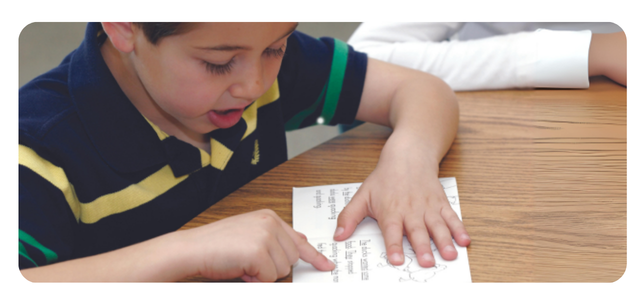
In just five months of SIPPS instruction [30 minutes two days per week], this student made significant growth: from a kindergarten level in foundational reading skills to a third grade level.
Alexa Speicher, ELA Teacher, Hillsborough County Public Schools, FL
I am thrilled with the accuracy of the SIPPS Placement Assessment in identifying students’ exact entry points along the phonics continuum and the direct approach to teaching identified skills at students’ points of need.
Dr. Stephanie Ferree, K–12 Supervisor of Curriculum and Instruction, Dallastown Area School District, Pennsylvania
With SIPPS, my students who previously believed that they couldn’t read or who disliked reading now say they enjoy reading and enjoy coming to their SIPPS small group. My readers are confident, feel good about reading, volunteer to read aloud, and have the skills to approach unfamiliar words with learned strategies.
Mariko Wesley-Fagundes, Special Education Teacher, grades 6–8, Union High School District, California
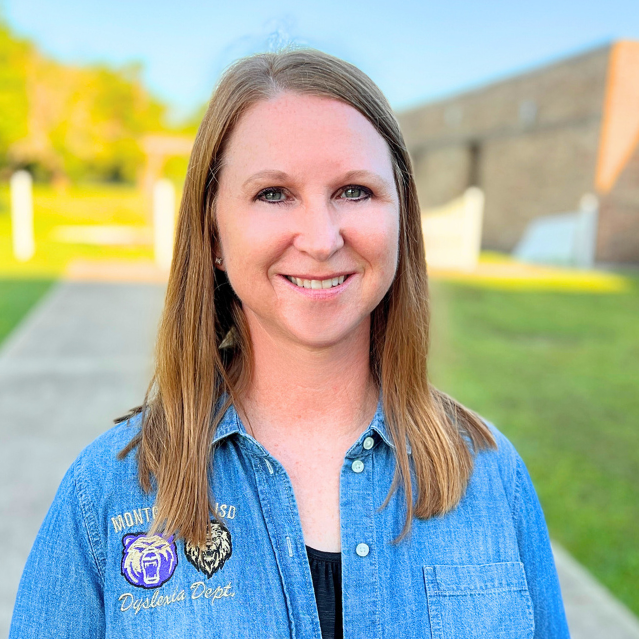
I appreciate that SIPPS includes all of the effective instructional components that the International Dyslexia Association (IDA) identifies as meeting the needs of students who struggle with learning to read, and it supports educators to teach these components effectively and efficiently.
Alayna Siemonsma, Section 504/Dyslexia Services Coordinator for Montgomery ISD, TX
SIPPS is a ‘one-stop shop’ of a program for me. It has every component necessary for success and can be used with various ages, grades, and reading levels. It targets all facets of literacy: decoding strategies, vocabulary and background building, phonological awareness, high-frequency words, comprehension, visuals, and multisensory techniques … you name it, SIPPS has it. After over two decades of teaching literacy, I love that I don’t have to search for supplements.
Desiree Torres, ENL teacher and 6th Grade Team Lead at the Dr. Richard Izquierdo Health and Science Charter School in the Bronx, NY
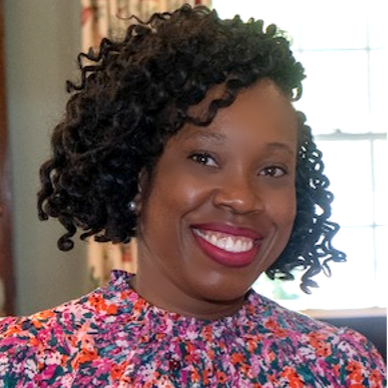
We love that we see our students progress. We love that we see our students’ confidence rise when they come to their class and know what to expect because of the SIPPS routines. We love when they are able to apply their new skills to the [SIPPS] Little Readers. We love the steady progression of lessons and that they fit within our time constraints.
Jacklyn Minimah-Wilson, CEO, Literacy Now, Houston, TX

Of the HCISD English language learners that participated in the SIPPS program, every first-year student scored above the “Beginner” level, and 80 percent of other English language learners increased in at least one proficiency level from the prior year.
Dr. Joseph Villarreal, Assistant Superintendent for Secondary Education for Harlingen Consolidated Independent School District (HCISD) in Harlingen, Texas
Why Educators Trust SIPPS
SIPPS removes the guesswork and makes the most of precious instructional time for every student. Precise placement, real-time progress data, and ready-to-teach lessons mean any teacher, tutor, or interventionist can deliver it with confidence—and get better at teaching reading with every SIPPS lesson taught.
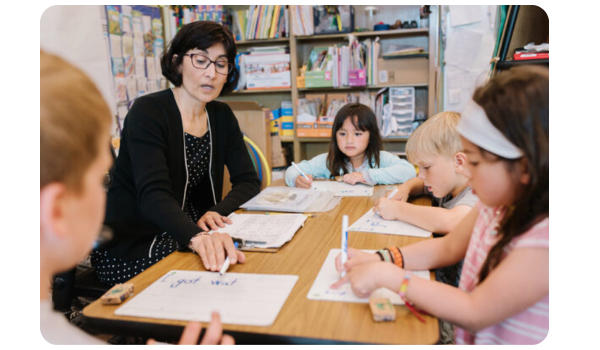
Precise Placement and Grouping
Placement assessments determine each student’s entry point, so teachers can group students with similar needs for targeted, effective instruction.
Progress Monitoring Made Simple
Built-in mastery tests make monitoring progress and informing instruction fast, so teachers always know what students need next.
Structured Lessons, Real-Time Help
A research-based scope and sequence means every lesson builds logically on the last. An AI implementation assistant is always there for teacher support.
Built to Grow Teacher Expertise
SIPPS is educative by design—embedded professional learning means teacher knowledge deepens with every lesson taught.
Age-Appropriate for Every Learner
For older striving readers, high-interest content and age-appropriate materials help close gaps without feeling remedial.
Practice That Ensures Mastery
An instructionally aligned app provides sufficient, deliberate independent retrieval practice—while giving teachers real-time visibility into student progress.
Currently Using SIPPS, Fourth Edition?
Learn Which Components Are Compatible With Your Edition for a Seamless Upgrade.
View Compatible Components
Backed by Evidence and Trusted Nationwide
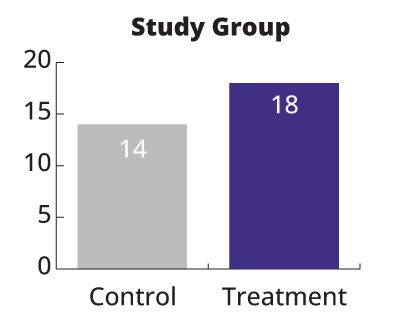
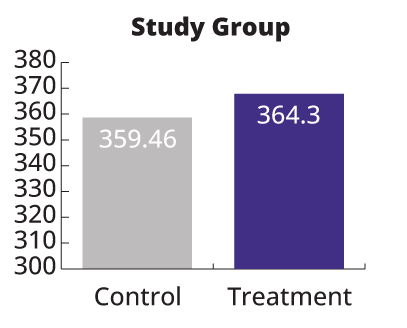
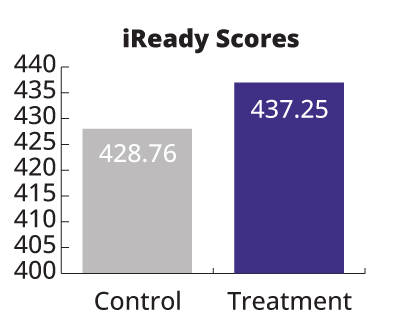
SIPPS is supported by multiple studies showing strong gains in foundational reading skills, including phonics, decoding, and fluency. These findings highlight its effectiveness for students who benefit from explicit, systematic instruction. View the research below.
Pajaro Valley USD, California
Pasco County Schools, Florida
Orange County School District, Florida
State-Approved, Science of Reading-Aligned Instruction
SIPPS has been vetted and approved by numerous state departments of education as high-quality, evidence-based instructional materials for foundational skills. As states bring instruction into alignment with the science of reading, SIPPS is consistently recognized as a resource that accelerates achievement for students who need it most. Read why so many states are recommending SIPPS.
Throughout the SIPPS curriculum, the different types of research-based practice are clearly evident. Sufficient and deliberate practice—including distributed, cumulative and retrieval practice—are regular features of the lessons.
Linda Diamond, coauthor of the Teaching Reading Sourcebook

SIPPS has something that I’m always looking for in programs: The authors understand phonology and the distinguishing features of classes of phonemes, which is so important because certain speech sounds can be easily confused with other speech sounds, and the instruction needs to teach children how to distinguish these sounds without overloading them with too much information.
Dr. Louisa Moats, nationally recognized researcher and authority on literacy education
How SIPPS Works
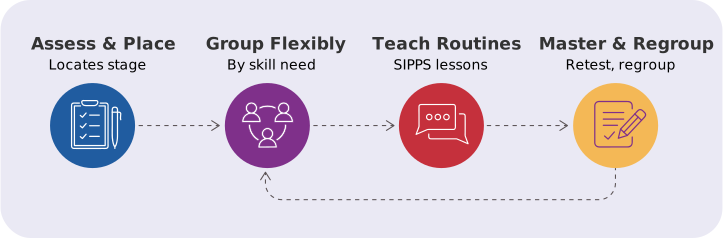
SIPPS moves every student through the same reliable cycle: a placement assessment locates each student’s point of instructional need, students are grouped by shared needs, and explicit routines build phonological awareness, spelling-sound correspondences, and high-frequency words, step by step. Students don’t advance until they’ve mastered a lesson, and ongoing mastery checks let teachers regroup students as they grow—so instruction always matches where a student actually is.
As they progress, students apply what they’re learning in decodable texts aligned to the phonics and high-frequency words they’ve mastered, giving them real practice with every new skill.
A Structured Phonics Progression Across Grade Levels
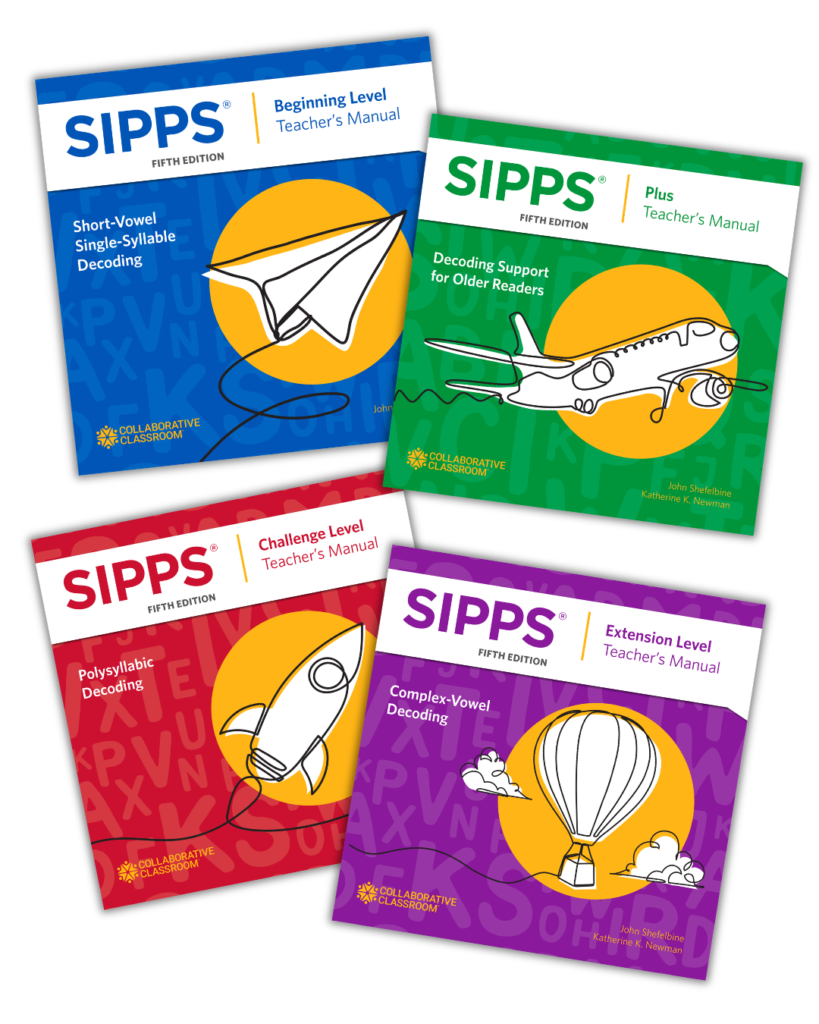
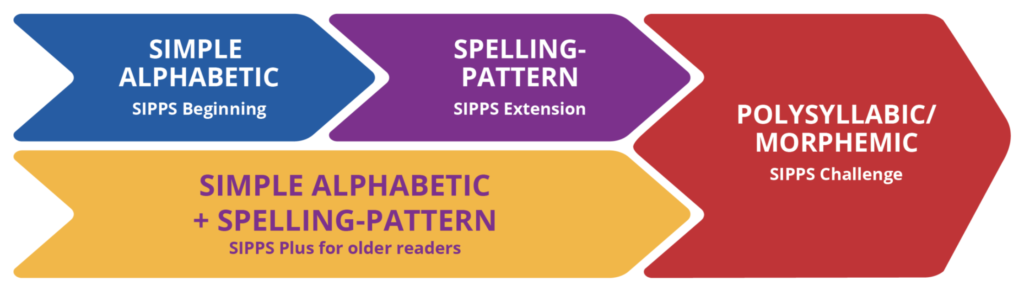
Research on how children learn to read shows that word recognition develops in predictable phases, from sounding out individual letters to recognizing spelling patterns to decoding complex, multi-syllable words. This progression is the foundation of the SIPPS scope and sequence—each level is matched to a specific phase, so students always work on skills suited to where they are as readers.
Grades K–3
Beginning, Extension, and Challenge move students through the three phases of decoding: simple alphabetic, spelling-pattern, and polysyllabic/morphemic. Each level meets students at their phase so instruction is neither too easy nor too advanced.
Grades 4–12
SIPPS Plus covers the simple alphabetic and spelling-pattern phases in age-appropriate lessons and texts, and Challenge Level builds polysyllabic decoding skills. Together, they close foundational skill gaps using materials that are age-appropriate for older readers.
Flexible Implementation Across MTSS Tiers
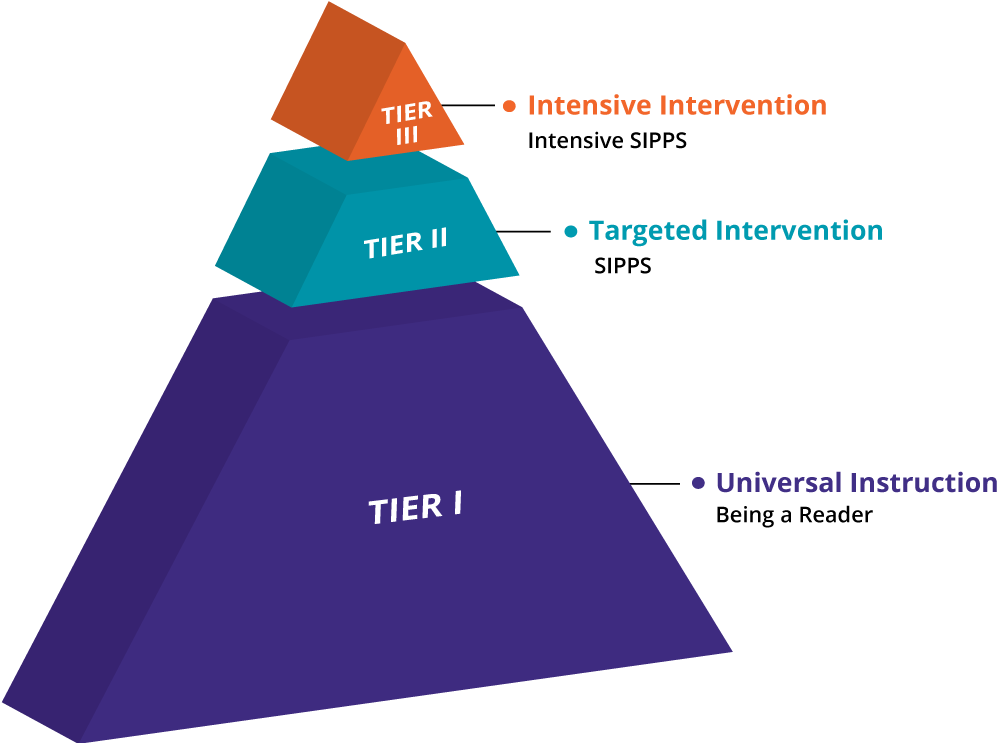
SIPPS’s explicit, systematic structure is what makes it flexible — direct, predictable routines let educators use it anywhere along the MTSS continuum. Diagnostic placement and mastery-based pacing let the same lessons flex in intensity, from a light Tier 1 dose to daily, intensive Tier 2 or 3 instruction.
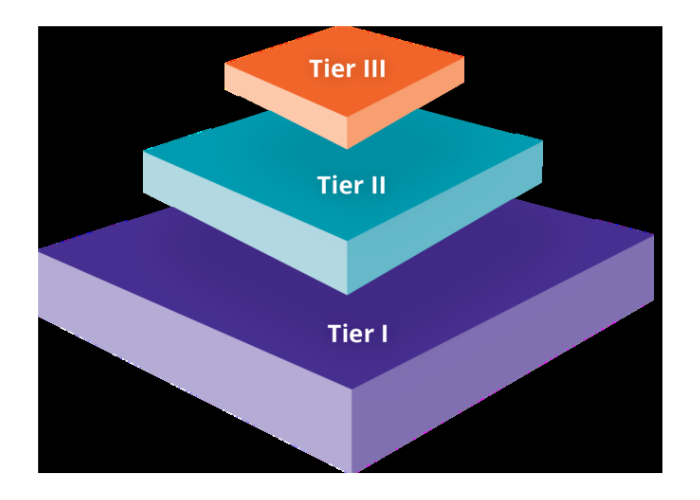
Tier 1: Strengthen Core Instruction
In grades K–2, SIPPS’s explicit routines make it effective as a standalone foundational skills reading program, or a supplement wherever a core ELA curriculum falls short. And if students need Tier 2 or 3 intervention, SIPPS provides a double dose of that same approach—making the return to Tier 1 seamless.
Tier 2: Accelerate Reading Growth
SIPPS shines as a highly effective Tier 2 reading intervention program paired with strong Tier 1 core instruction. When used alongside a comprehensive ELA program like Collaborative Literacy, SIPPS delivers the targeted practice that accelerates foundational skills mastery.
Tier 3: Intensive Support to Close Gaps
For students who need the most support, SIPPS provides intensive reading intervention without changing the routines students already know. Embedded intensification options and multisensory strategies help striving readers build the accurate, automatic word recognition skills required to catch up to grade level.
SIPPS for Grades K–3
Foundational Skills & Intervention for Beginning and Striving Readers
Grades K–3
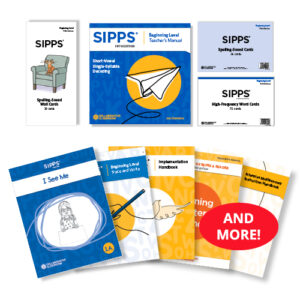
Beginning Level provides on-level instruction for kindergarten students and guides nonreaders through the simple alphabetic phase of reading. It also serves as an intervention for students in grades 1–3.
Grades 1–3
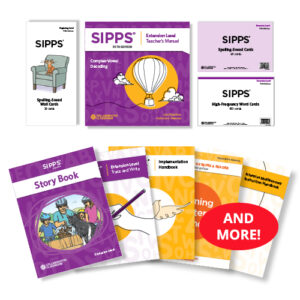
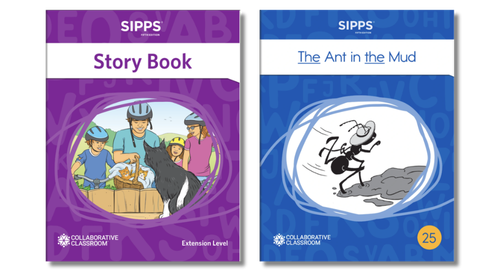
Extension Level is designed for students who have mastered the simple alphabetic phase and are ready to develop spelling-pattern knowledge. It provides on-level instruction for grade 1 students and intervention support for students in grades 2–3.
Grades 2–3
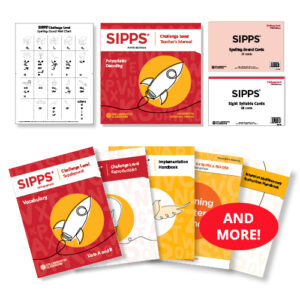
Challenge Level supports students who have mastered the spelling-pattern phase and are ready for more advanced word study. Students develop complex polysyllabic decoding skills and strategies to become fluent, independent readers.
Decodable Texts
Students are intrinsically motivated to read age-appropriate decodable texts that include recently taught spelling-sounds and high-frequency words. Students progress from small, decodable readers to an anthology of engaging stories that are carefully scaffolded to build skills from the phonics continuum.
SIPPS for Grades 4–12
Reading Intervention for Older Students
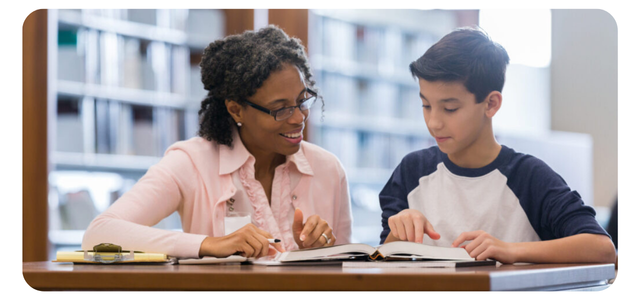
Older readers in upper elementary grades, middle school, and high school may still need support with foundational reading skills. SIPPS Plus and SIPPS Challenge provide explicit, systematic instruction that helps older struggling readers strengthen decoding, word recognition, and fluency skills—using materials and approaches that respect their age, interests, and learning needs.
SIPPS Plus
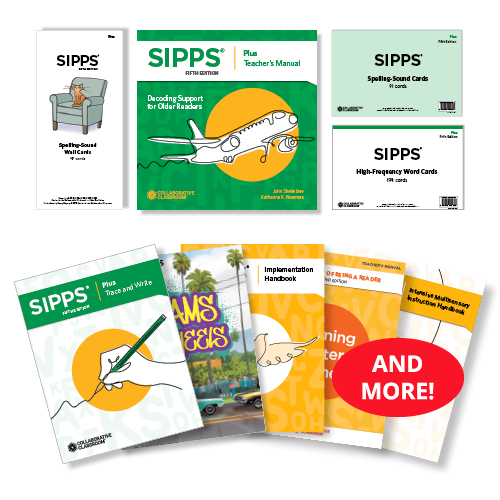
SIPPS Plus is designed for older students in grades 4–12 who are reading at a first- or second-grade level and need age-appropriate foundational skills instruction. Combining content from the Beginning and Extension Levels into an accelerated 55-lesson sequence, SIPPS Plus helps students build decoding skills while honoring them as learners.
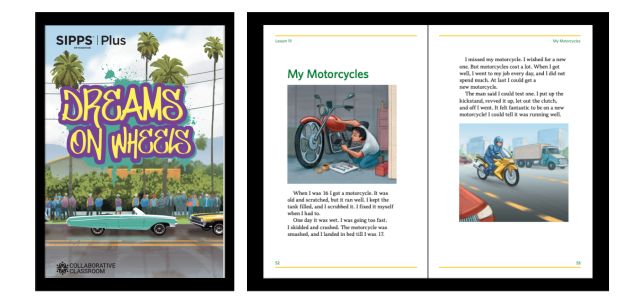
The student anthology, Dreams on Wheels, features high-interest, decodable texts that give students meaningful opportunities to apply newly learned phonics skills and high-frequency words.
SIPPS Challenge
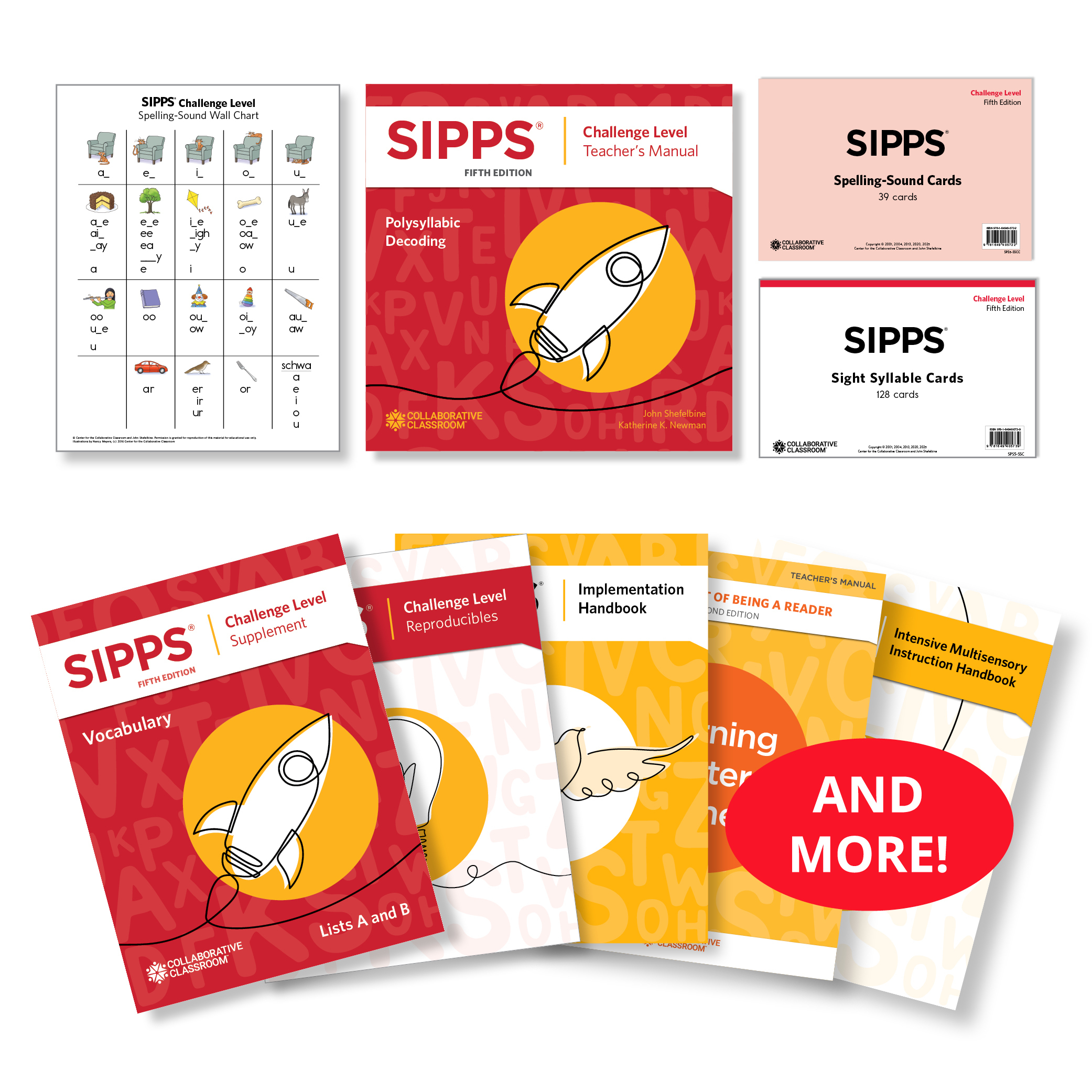
SIPPS Challenge Level helps students who have mastered basic spelling patterns develop more advanced word-reading skills. Students learn complex syllabic patterns and morphology, including prefixes, roots, and suffixes, to decode and spell increasingly complex words.
Differentiated word lists make it easy to adapt each lesson for readers in elementary, middle, or high school, providing targeted practice with multisyllabic words older students are likely to encounter in grade-level reading and academic content.
Age-Appropriate Text That Engages Older Readers
Dreams on Wheels is a substantial anthology of engaging, decodable stories created for older developing readers. Its age-appropriate topics and trade-book look help students feel confident and proud to read while reinforcing SIPPS Plus lessons to build fluency and comprehension.
Additional Program Features
An Instructionally Aligned Independent Practice App
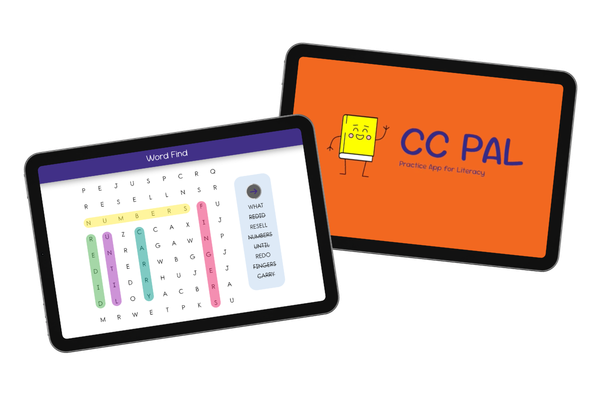
The CC PAL app gives students daily, targeted, independent retrieval practice aligned to their SIPPS instruction. With “just-right” interactive practice activities and connected text reading, students get the engaging, effective practice they need for foundational skills mastery, while educators receive real-time progress tracking data.
Additional Book Collections to Support Daily Reading
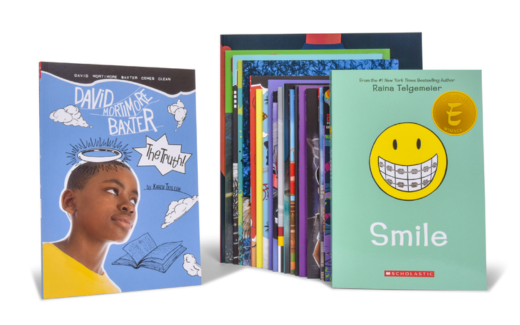
Available for purchase separately, K–12 Fluency Practice Libraries for SIPPS provide additional opportunities for students to practice applying their newly learned skills as they transition to trade books.
Intensive Multisensory Instruction
For students who need additional support to access the foundational skills necessary for reading independence, the Intensive Multisensory Instruction for SIPPS Handbook provides enhanced teacher guidance for each instructional routine, as well as additional multisensory strategies for integrating visual, auditory, and kinesthetic-tactile learning pathways. Multisensory, structured approaches are widely used in intervention for students with dyslexia and other reading difficulties.
Research-based Instructional Practices to Support English Learner Students
SIPPS embeds research-based instructional practices that help multilingual learners build foundational reading skills while developing English language proficiency. Key supports include:
- Ongoing formative assessment to monitor progress and guide targeted instruction
- Visual supports using letters, words, and mnemonic illustrations to reinforce learning
- Explicit instruction and teacher modeling to introduce and reinforce new skills
- Frequent opportunities for oral practice through structured routines and choral responses
- Systematic review of phonics skills and high-frequency words to strengthen retention
Instructionally Aligned with Being a Reader Core Instruction
SIPPS and Being a Reader™ are designed to work together to support every reader’s journey. Being a Reader provides comprehensive K–5 core reading instruction, while SIPPS delivers an additional, systematic dose of foundational skills instruction for students who need targeted support.
With aligned scope and sequences, routines, instructional practices, and a shared commitment to building confident readers, the two programs help teachers provide the right level of support while keeping students connected to grade-level literacy experiences.
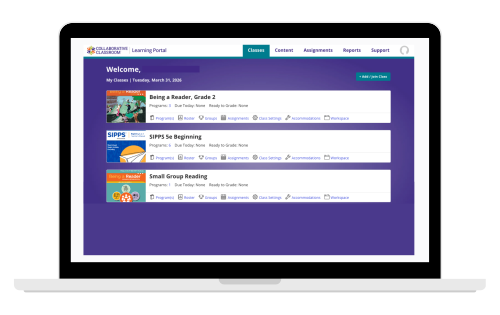
Digital Materials, Supports, and Continuous Program Updates on the Learning Portal
Every SIPPS package includes an initial one-year Learning Portal subscription, unlocking advanced tools that streamline lesson planning and sharpen instructional impact. Your subscription delivers continuous program updates and implementation support so educators can plan faster, group smarter, and respond to student needs in real time.
AI-Powered Implementation Support at Your Fingertips
CC AI Assistant is a personalized support tool available via the Learning Portal and trained exclusively on Collaborative Classroom’s content to give teachers accurate, reliable answers whenever they need them. Whether troubleshooting a lesson or supporting a struggling reader, help is just a click away.
I love getting immediate, accurate answers that help me move forward quickly. Being able to ask follow-up questions gives me even more clarity when I need it. It is a fantastic experience!
Kristy Nelson, Elementary Instructional Coach
Professional Learning Pathways to Build Educator Expertise
At Collaborative Classroom, we know that how we teach matters as much as what we teach. That’s why we offer flexible professional learning pathways designed to build educator expertise, strengthen implementation, and fit the needs of every school and district—from SIPPS certification to collaborative learning and customized professional learning plans.
SIPPS Certification Courses
Collaborative Classroom offers two badged certification pathways to help educators build SIPPS expertise, strengthen implementation, and expand the impact of instruction.
SIPPS Certified Educators develop the expertise to teach all levels of SIPPS with confidence. They gain a deeper understanding of SIPPS instructional routines and principles to deliver systematic, effective foundational skills instruction.
SIPPS Certified Trainers take their expertise further by learning to lead SIPPS professional learning for colleagues. Trainers help build capacity, support successful implementation, and expand access to high-quality SIPPS instruction across schools and districts—with access to exclusive trainer resources.

Collaborative Coach: One-on-One Virtual Professional Learning
Collaborative Coach pairs individual educators with their own expert human coach for fully personalized, program-specific professional learning.
Through a flexible, video-based cycle of 1:1 learning with their coach, each educator deepens their teaching practice and grows their understanding of the Collaborative Classroom curriculum they are implementing in a safe and supportive environment.
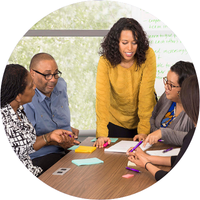
Custom Professional Learning Plans
To meet your organization’s unique needs, we offer custom professional learning plans that weave together a variety of formats to achieve your implementation goals. When shaping your plan, we consider your available time, funding, and resources alongside short- and long-term instructional priorities, who will be involved and how they’re supported, educators’ prior professional learning experiences, and any relevant technology considerations.
Related SIPPS Resources
Featured Resources
Why are so many states recommending SIPPS?
Leading Change for Reading Achievement in Stockton, CA
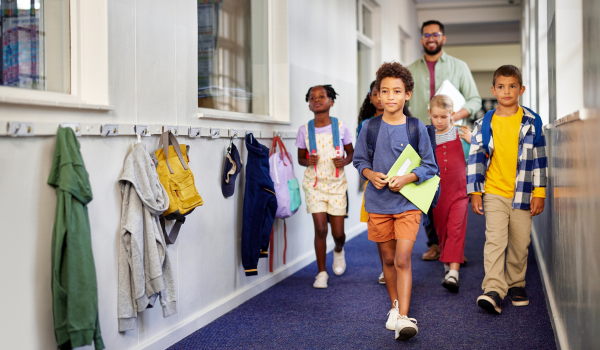
A Leader’s Guide to Launching a Walk to Read Model
All SIPPS Resources
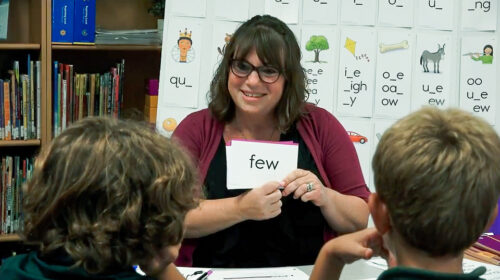
Effective Reading Intervention: What Research Says and How SIPPS Brings It to Life
Implementing Walk to Read: Lessons From Jurupa Unified School District
California’s LCRS Grant + Walk to Read: How Two California Schools Moved from Grant to Growth

Beyond Intervention: How SIPPS Has Shifted the Instructional Culture of Colorado’s District 49
How Oakland Unified School District’s Coaching Infrastructure Drives Reading Tutoring Success
How California’s DEEP Schools Use SIPPS Tutoring to Challenge the System and Fill Gaps
Program Add-ons and Alignment Across K–12
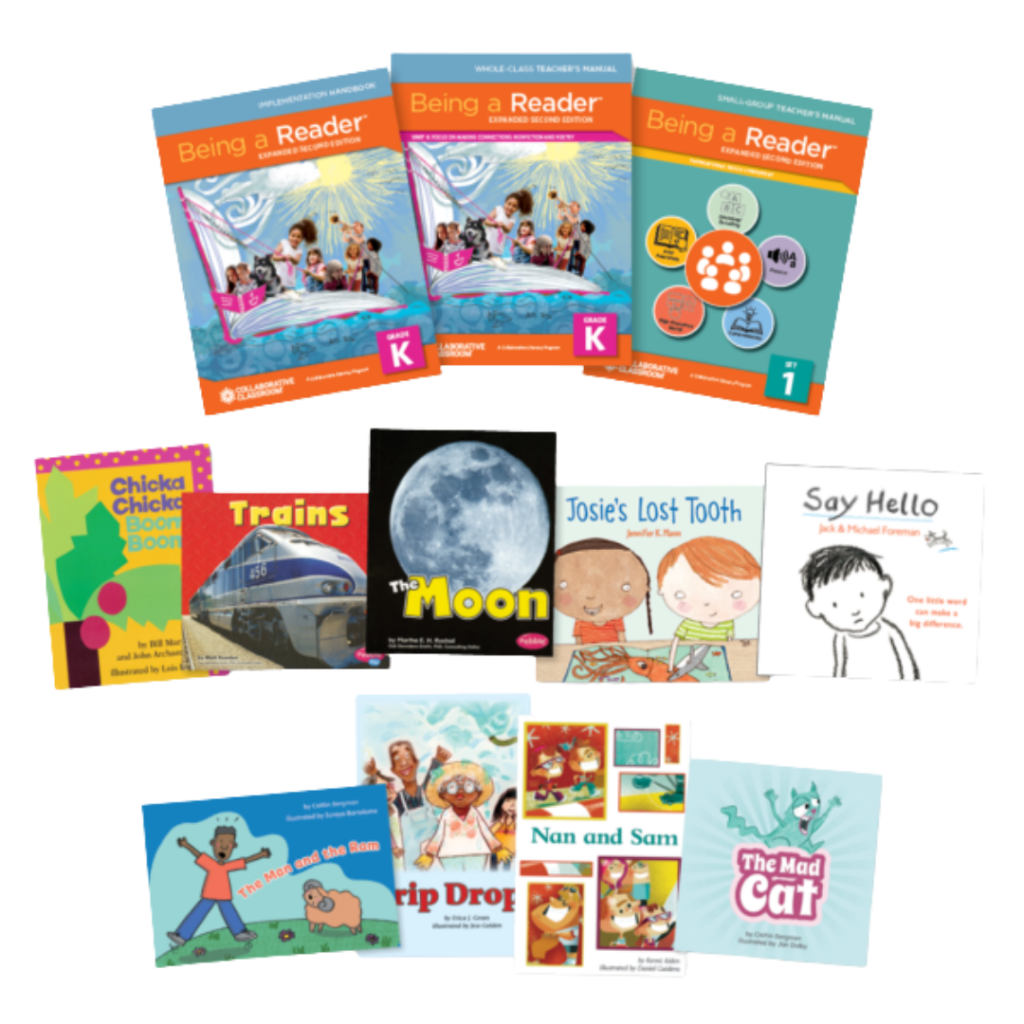
SIPPS+ Being a Reader for Aligned Intervention
Being a Reader shares aligned scopes and sequences and teaching routines with SIPPS, providing a smooth transition for students moving between tiers.
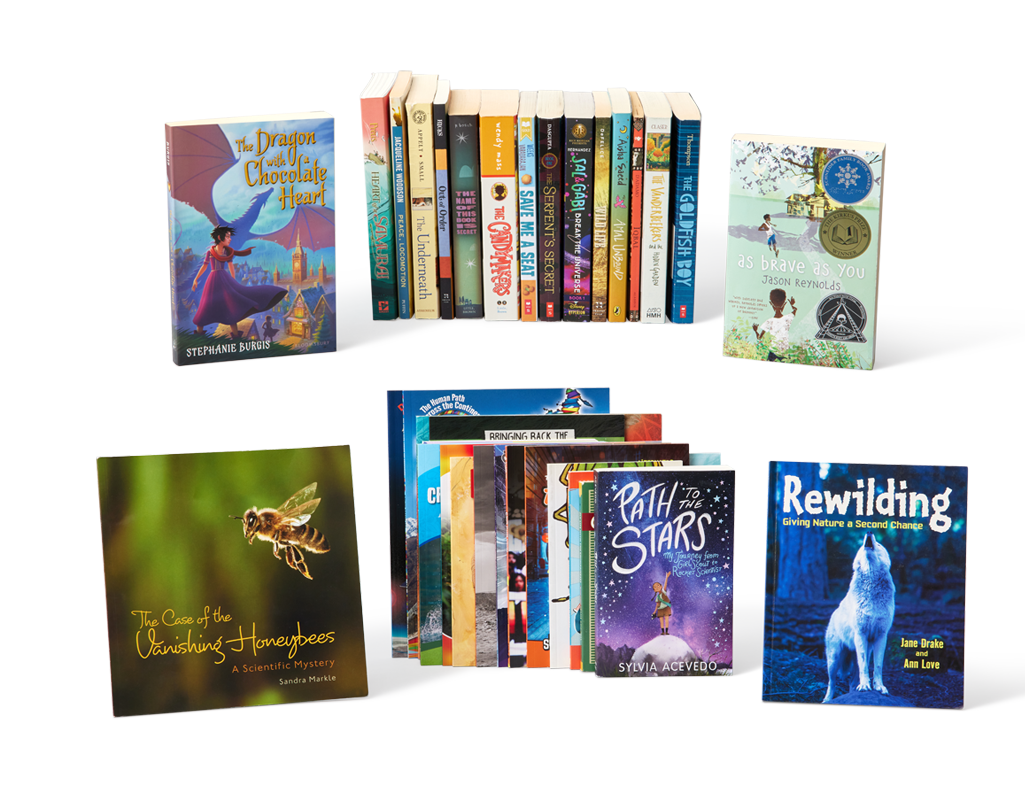
Fluency Practice Libraries for SIPPS, K–12
Expand your SIPPS library with high-interest, age-appropriate fluency practice libraries that support K–12 readers with engaging, carefully leveled fiction and nonfiction texts designed to build accuracy, automaticity, and confidence as students progress from decodable reading to independent, fluent reading.
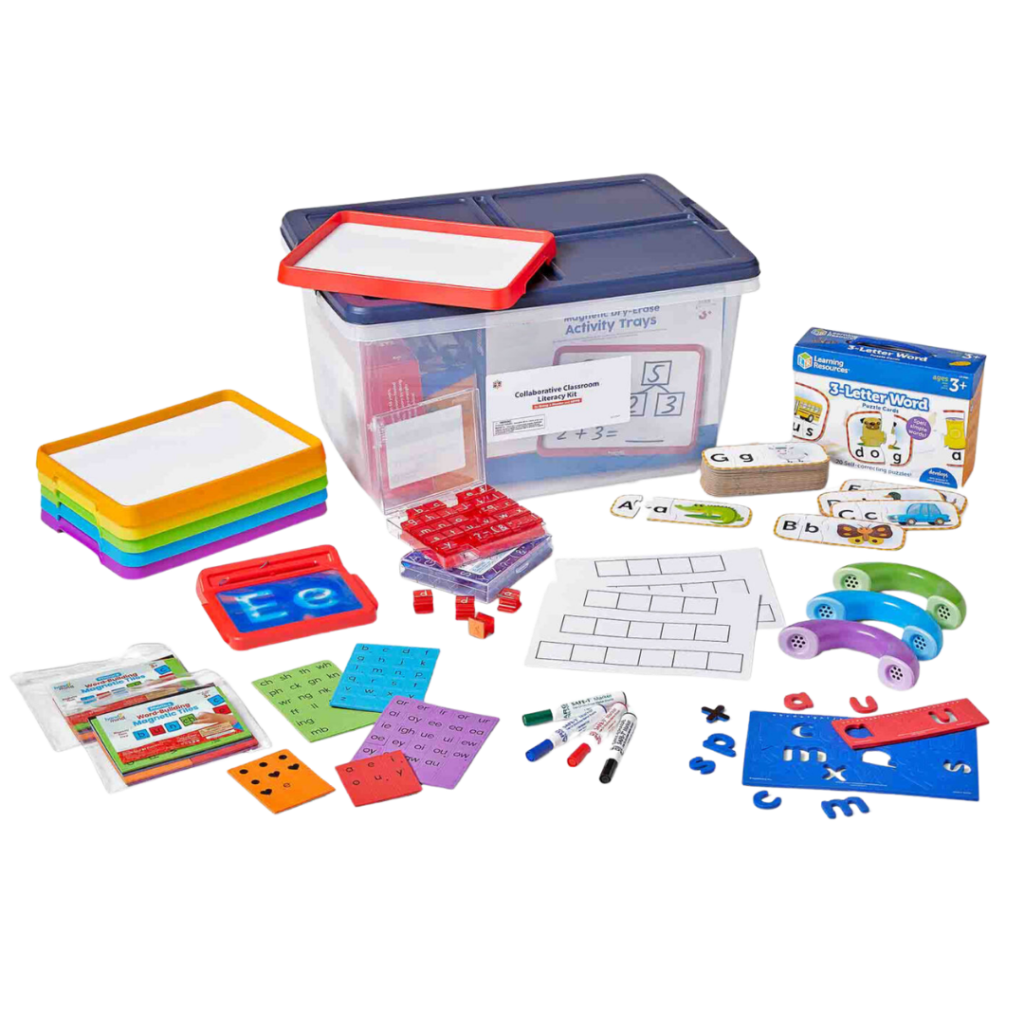
Collaborative Classroom Literacy Kit (K–3)
Hands-on materials that support engaging, lesson-aligned independent work. Each kit supports up to six students.
Aligned Early Literacy Instruction
Whether you’re looking for a complete curriculum for 3- and 4-year-olds, a targeted literacy program, or professional learning to empower your educators, our proven offerings support joyful learning and strong outcomes for early childhood.

Get Sample Lessons
Download lessons, text excerpts, placement assessments, and more.