-

From Big Feelings to Self-Regulation: 5 Strategies to Help Preschoolers Find Their Calm
Read more: From Big Feelings to Self-Regulation: 5 Strategies to Help Preschoolers Find Their CalmBig feelings are a normal part of preschool and PreK classrooms, but that doesn’t make these feelings easy to navigate, whether for kids or for the educators guiding them. The good news? Self-regulation is a skill, not a personality trait. Just like learning to tie shoes or write their names, children can learn, step by…
-
Trusting the Process: How SIPPS Builds Independent Readers in California’s Burton School District
Read more: Trusting the Process: How SIPPS Builds Independent Readers in California’s Burton School DistrictCristina Ambriz is the Curriculum Coordinator for Burton School District in Porterville, California (Tulare County). Burton serves a diverse group of students with a wide range of academic, social-emotional, and learning needs. Like many districts, they see students enter school with varying reading abilities and foundational skill gaps. Some may need additional support with phonemic…
-
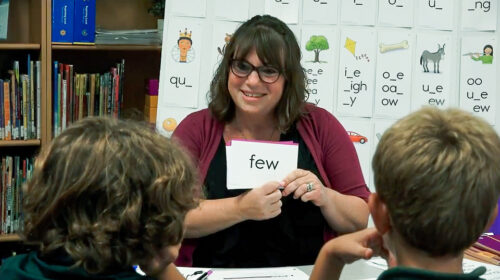
Effective Reading Intervention: What Research Says and How SIPPS Brings It to Life
Read more: Effective Reading Intervention: What Research Says and How SIPPS Brings It to LifeBased on insights from the Collaborative Classroom white paper High-Quality Interventions to Ensure Literacy for All Students, this article connects research on effective reading intervention to the SIPPS® program.
-

How to Help Older Striving Readers Access Complex Texts
Read more: How to Help Older Striving Readers Access Complex TextsAs students move into the upper grades, the texts they encounter become increasingly complex—and reading becomes essential to learning across every subject. For students with gaps in foundational reading skills, this shift can make subjects like science, history, and even math more difficult. Striving readers may understand the concepts being taught but struggle to access…
-

Developing Early Literacy Skills: Vocabulary and Meaning
Read more: Developing Early Literacy Skills: Vocabulary and MeaningVocabulary and Meaning is the final article in a series based on the findings of the National Early Literacy Panel and the instructional practices that best support emergent literacy in children from birth to 5 years old. The Big 5 Early Literacy Skills are oral language, phonological awareness, print concepts, alphabetic principle, and vocabulary and…
-
Implementing Walk to Read: Lessons From Jurupa Unified School District
Read more: Implementing Walk to Read: Lessons From Jurupa Unified School DistrictWhen Jurupa Unified School District Literacy Coach Sonya Martinez and Principal Tina Herrera first saw Walk to Read in action, they didn’t know exactly how they would make it work at their own schools.
-
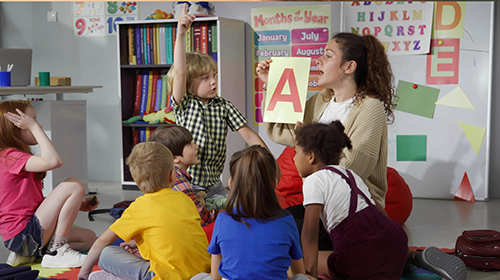
Developing Early Literacy Skills: The Alphabetic Principle
Read more: Developing Early Literacy Skills: The Alphabetic PrincipleThe Alphabetic Principle is the fourth article in a series based on the findings of the National Early Literacy Panel (2002) and the instructional practices that best support emergent literacy in children from birth to 5 years old. The Big 5 Early Literacy Skills are oral language, phonological awareness, print concepts, alphabetic principle, and vocabulary…
-

Beyond Intervention: How SIPPS Has Shifted the Instructional Culture of Colorado’s District 49
Read more: Beyond Intervention: How SIPPS Has Shifted the Instructional Culture of Colorado’s District 49Jess Crawford, Colorado’s Manager of Educational Partnerships, spoke with Kimberly Escobido, Literacy Instructional Coach at Stetson Elementary, and Yuki Rockwell, District 49’s Coordinator of Literacy Performance, to learn about their successful district/school collaboration and how SIPPS is impacting their young readers.
-
How a Comprehensive Preschool Curriculum Helps Early Childhood Teachers Ensure Kindergarten-Readiness
Read more: How a Comprehensive Preschool Curriculum Helps Early Childhood Teachers Ensure Kindergarten-ReadinessJennifer Wilson and Karie Dowell are PreK teachers serving the School District of the City of York, Pennsylvania. Jennifer teaches the children of Edgar Fahs Smith STEAM Academy and Karie teaches at Goode PreK-8 School. Both schools piloted, then adopted the Every Child Ready program. Here, Jennifer and Karie share their experience working with Every…
-
How Oakland Unified School District’s Coaching Infrastructure Drives Reading Tutoring Success
Read more: How Oakland Unified School District’s Coaching Infrastructure Drives Reading Tutoring SuccessWhen high-quality instructional materials are coupled with curriculum-based professional learning, educators are equipped to ensure student outcomes. Since 2021, the Rainin Foundation has partnered with Collaborative Classroom (and formerly FluentSeeds) to build a coaching infrastructure in Oakland Unified School District (OUSD) that develops SIPPS® tutors into skilled instructional experts. SIPPS tutors are OUSD employees recruited…
- Search
- |
- Learning Portal
- |
- Support Center
- |
- Store Account
- |
- Store
- |
- $0.00
- n a v
Blog
Items per page
Topic
Products
Choose from a variety of topics spanning early childhood through grade 12.