Transition songs are far more than just “filler” music; they provide essential rhythmic scaffolding that supports learning in preschool and early childhood environments. These songs act as a cognitive bridge, guiding children from high-energy play to focused academic engagement. By turning “downtime” into “learning time,” we ensure that every minute of the day contributes to a child’s development.
In this blog, we highlight the top benefits of using rhythm in the classroom. Before we begin, listen to one of the core transition songs in the SEEDS of Learning Framework and the Pinecone Path™ program, “Letters Have Names.”
Letters Have Names
Letters, letters, letters have names.
What is the name of this letter?
[Write the letter as you say the stroke sequence.]
______ is the name of this letter!
How Transition Songs Support Children’s Learning
The use of music and rhythm in early childhood settings provides numerous benefits. Educators most frequently emphasize the following four:
1. Reducing “Transition Friction”
2. Building Executive Function
3. Language and Literacy Development
4. Creating a Positive Emotional Climate
1. Reducing “Transition Friction”
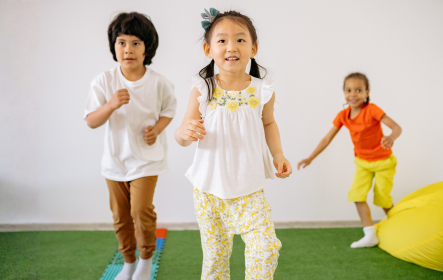
Transitions are often the most stressful times for children because they involve stopping a preferred activity (like playing) to start a required one (like cleaning up).
- The Benefit: Music lowers cortisol (the stress hormone). When a child hears a familiar melody, it bypasses the “struggle” and moves them into a predictable routine, reducing meltdowns and resistance.
2. Building Executive Function
Executive function involves the ability to plan, focus, and multitask.
- Predictability: Knowing that “Letters Have Names” always comes before “Circle Time” helps children build a mental map of their day.
- Self-Regulation: Songs provide a natural time limit. A child learns to pace their movements to finish a task by the time the song ends, which is a foundational skill for time management.
3. Language and Literacy Development
Seeds of Learning emphasizes oral language as the root of literacy.
- Repetition and Rhyme: Transition songs use repetitive structures that help children memorize vocabulary and understand sentence patterns.
- Phonological Awareness: Singing naturally breaks words into syllables and emphasizes sounds, which helps kids “hear” the architecture of language.
4. Creating a Positive Emotional Climate
Learning happens best when a child feels safe and connected.
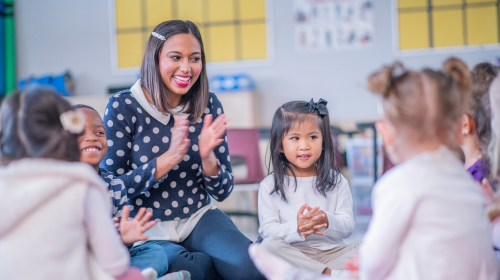
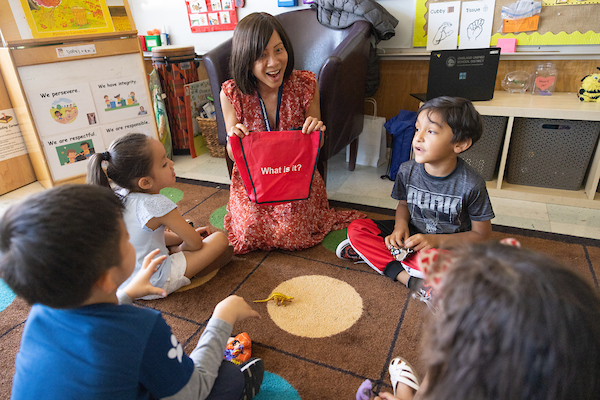
- Shared Experience: Singing together creates a sense of belonging. It turns a chore (like putting away blocks) into a collective, rhythmic game.
- Positive Association: Instead of a teacher or parent “barking” orders, the music provides the instruction. This keeps the adult-child relationship positive and supportive.
A Win-Win: Why Teachers and Kids Both Benefit
Transitions are often the most chaotic parts of the day, but music changes the energy of the room for everyone involved.
| For the Child | For the Teacher |
| Reduces Stress: Music lowers cortisol, helping kids stop a preferred activity (like play) without a “fight-or-flight” response. | Preserves Voice & Energy: Instead of repeating instructions or raising their voice, the teacher lets the song do the work. |
| Builds Autonomy: The song acts as a natural timer, allowing kids to pace themselves and finish tasks independently. | Maximizes Instructional Time: Smooth transitions mean more minutes spent on core learning and less on behavior management. |
| Emotional Safety: A predictable song creates a sense of belonging and “group flow,” making the child feel safe and ready to learn. | Strengthens Bonds: Singing together supports smoother classroom management while shifting the teacher’s role from a “taskmaster” to a supportive, rhythmic leader—deepening teacher-student connection and ensuring more meaningful learning time. |
The Literacy Connection: Singing the Way to Reading
The path to reading begins with the ear, not the eye. Transition songs are powerful literacy tools because they lean into the roots of oral language:
- Phonological Awareness: When children sing, they naturally elongate vowels and emphasize consonants. This helps them “chunk” words into syllables and recognize the individual sounds (phonemes) that make up language.
- Vocabulary and Syntax: The repetitive nature of these songs embeds new words and correct sentence structures into a child’s long-term memory without the need for rote drills.
- Rhyme and Rhythm: Recognizing patterns in music is the precursor to recognizing patterns in text. A child who can track a beat is building the neural pathways necessary to track a line of print.
Rhyme Song
Frog, log, these two rhyme.
Frog, log, these two rhyme.
Frog, log, these two rhyme.
They sound the same at the end!
/Ŏg/!
Letters Make Sounds
Letters, letters, letters make sounds.
What is the sound of this letter?
[Write the letter as you say the stroke sequence.]
__ is the sound of this letter!
When you move from free play to another activity, you use transition songs. They’re fun and catchy, but they also help children build foundational literacy skills.
After a month or two, you hear children singing them on their own, without prompting.
Those are beautiful moments—when teachers see it’s working. The children don’t even realize how much they’re learning, all through developmentally appropriate, hands-on experiences.
Nora Goodale, Regional Director for Kidango
Related Resources:
- Download free Transition Songs
- Read Early Childhood Strategies to Support Oral Language and Vocabulary
- Watch a webinar featuring leaders from Kidango, a highly-successful non-profit preschool and childcare organization in the San Francisco Bay Area that is recognized for providing high-quality early learning environments for thousands of low-income children for over 40 years.
Early Childhood Offerings from Collaborative Classroom
Quality relationships, play, and developmentally appropriate, evidence-based instruction support the growth of children’s early literacy, oral language, self-regulation, and social skills.
Whether you’re seeking professional learning or a curriculum, we offer powerful solutions for Preschool, Pre-K, Transitional Kindergarten, and community-based educational environments serving children ages 3–5:
- Every Child Ready: A comprehensive, evidence-based PK3–PK4 curriculum for all domains of learning, available in English and Spanish
- SEEDS Professional Learning Framework: An evidence-based professional learning framework for all early childhood educators
- Pinecone Path: A research-aligned and play-rich literacy curriculum for the vital year before kindergarten
Not sure which solution is right for you? View a side-by-side comparison.