
Let’s explore print concepts! This is the third article in a series based on the findings of the National Early Literacy Panel (2002) and the instructional practices that best support emergent literacy in children from birth to 5 years old. Their report, Developing Early Literacy (2008), identified a set of foundational abilities developed in the preschool years that strongly predict later reading success.
The SEEDS of Learning Professional Learning Framework for 3–5-year-olds created the Big 5 Early Literacy Skills based on the 11 literacy-related variables that consistently predict conventional literacy outcomes. The relationship between these variables and their positive outcomes is significant, highly reliable, and stable.
For memory and ease of recall, the 11 variables have been combined into the “Big 5” early literacy predictors:
- Oral language
- Phonological awareness
- Print concepts
- Alphabetic principle
- Oral language
Previous blogs in this series discussed oral language and phonological awareness. Here we look at how preschool children’s print knowledge is linked to later understanding of decoding, spelling, and reading comprehension.
Print Concepts and the Alphabetic Principle
Exposure to print through reading books—ideally beginning at birth—plays a powerful role in children’s readiness to read. In preschool settings, children learn that print carries meaning and represents spoken language. It is what we read and write.
A child may know that a picture of a bird represents a bird. But understanding that the word bird represents the sounds /b/ /er/ /d/ is a different and more abstract insight.
Before children can decode, blend, or read independently, they must first grasp a foundational idea: the marks on a page are language made visible.
The National Early Literacy Panel identified print knowledge (including print concepts) as a consistent predictor of later reading success. In other words, before children can read words, they must understand what words on a page are and how they work.

What is Print Awareness?
These early understandings, often called print awareness, include knowing:
- Print tells the story.
- We read from left to right and top to bottom (in English).
- Words are separated by spaces.
- Letters combine to form words.
Print concepts lay the groundwork for the alphabetic principle, the understanding that letters and letter patterns represent the sounds in spoken words. Development is not strictly linear; children often build print awareness and alphabetic knowledge in tandem. A lack of understanding how print works makes connecting sounds to symbols far more difficult.
When educators intentionally point to words during read-alouds, model directionality, and discuss the role of text, they help children shift from seeing print as background decoration to recognizing it as purposeful communication.
That shift is the beginning of reading.
The Functions of Print: How Print Works
Children need to learn that print follows predictable conventions. They need to understand that print carries meaning and that speech is written down.
Directionality
In English, print is read from left to right and from top to bottom. At the end of a line, our eyes perform a “return sweep” to the beginning of the next line before continuing down the page. Early writers may not yet follow these patterns, placing marks randomly across a page. Learning that print must be organized consistently in order to be understood is part of developing print concepts.
It is also important to recognize that print conventions are language-specific. While English is read from left to right, languages such as Arabic and Hebrew are read from right to left. Other writing systems may follow different conventions. For classrooms that incorporate children’s home languages, acknowledging these differences is essential. Doing so not only supports conceptual clarity but also affirms children’s linguistic identities and experiences.
Orientation
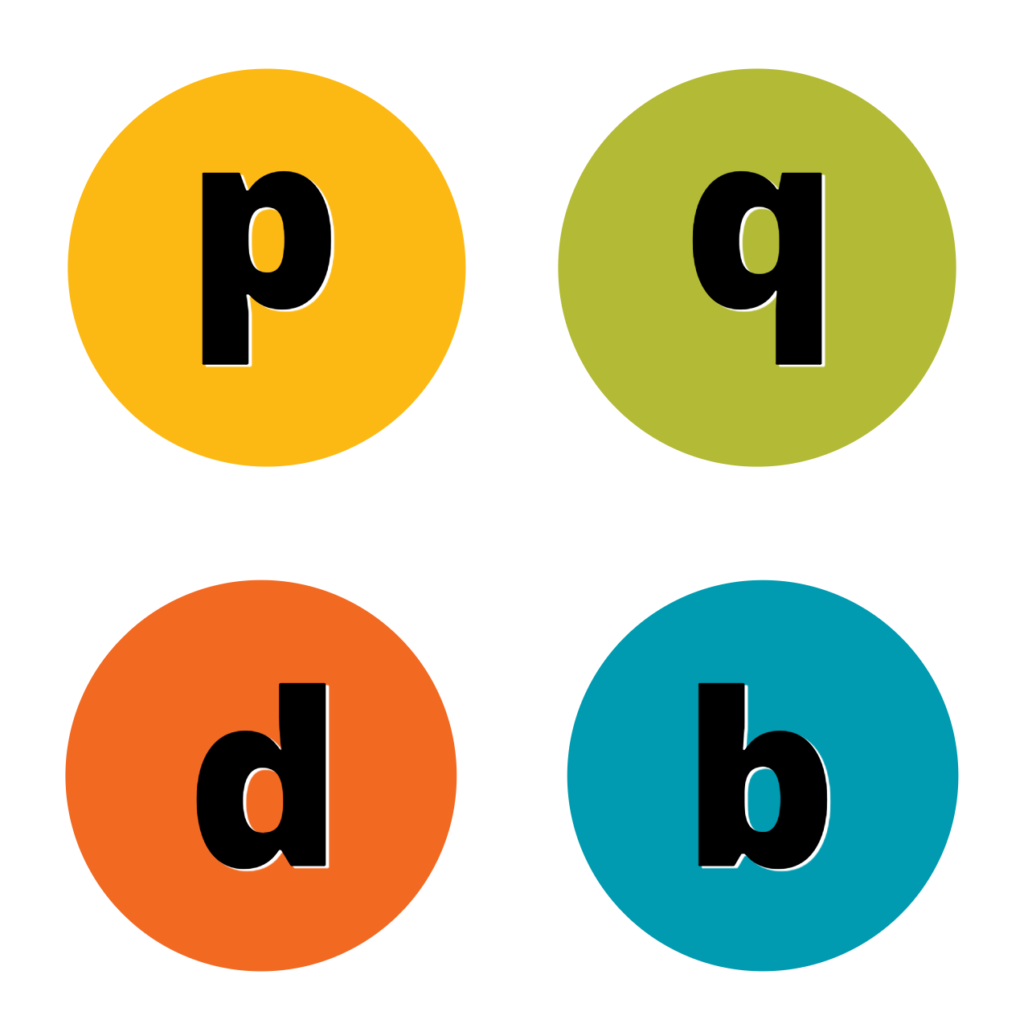
Unlike most objects in a child’s world, a letter’s orientation can change its identity.
For example, b, d, p, and q are distinguished only by their position.
Learning that letters have fixed forms and consistent orientations is an essential part of learning how print works.
Letters and Spaces
Children must also learn that:
- Letters and letter groups represent sounds.
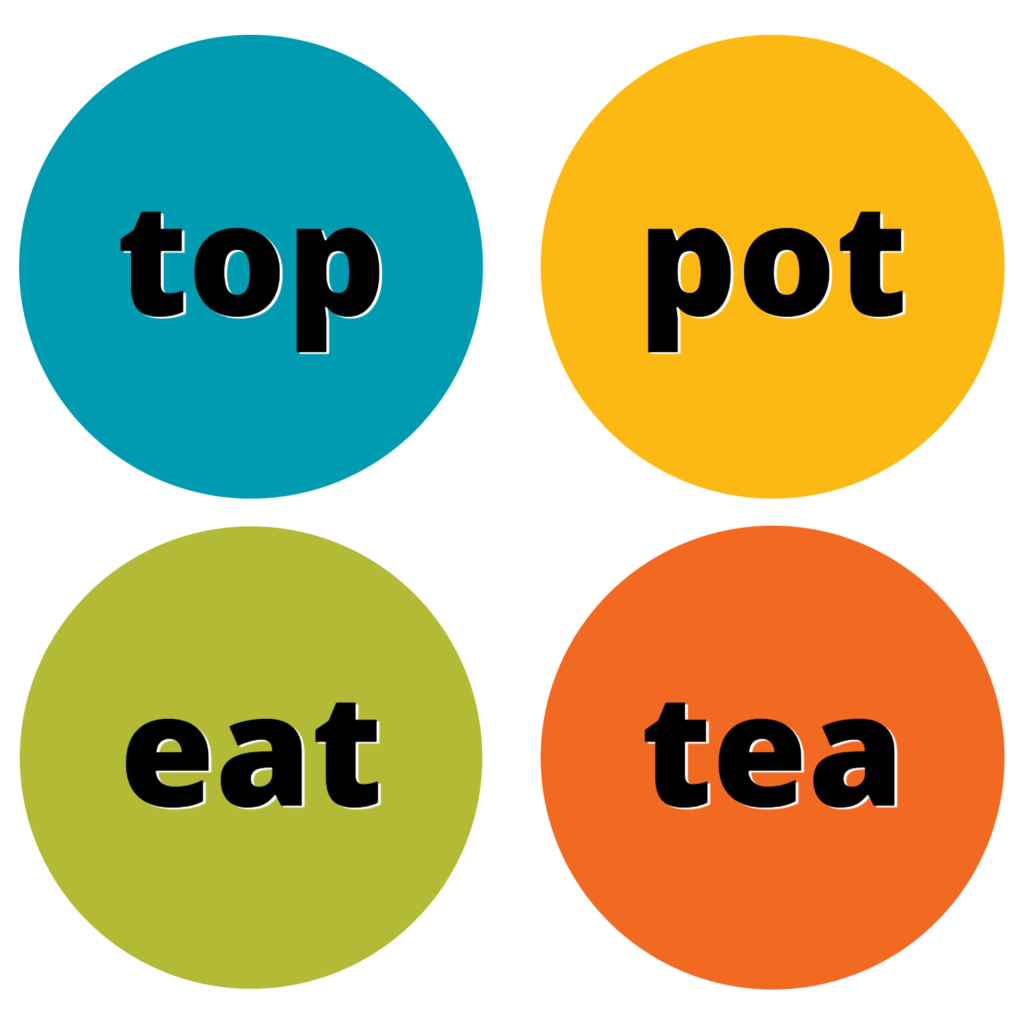
- The order of letters affects meaning.
- Spaces between words are essential for comprehension.
These print concepts are not intuitive; they are learned through repeated, supported interactions with print.
“In the early preschool years, children may begin to point along as they ‘read’ familiar books or other texts. Show children that a word you are saying aloud is represented by one written word on the page by demonstrating how to point to each word as you read aloud. Children probably won’t yet be able to point accurately, but they can develop their understanding of how print works by watching, listening, and applying what they’re learning.” (3)
Creating Print-Rich Environments
A print-rich classroom surrounds children with written words through books, libraries, posters, labels, writing materials, and thoughtfully designed play areas. These materials do more than decorate a space; they help children see that print carries meaning and serves real-life purposes.
A key component of a print-rich environment is environmental print, the print that appears in everyday surroundings, such as signs, logos, labels, menus, and schedules. Environmental print often serves as a child’s introduction to reading because it is familiar, meaningful, and embedded in daily experiences. Through interaction with environmental print, children begin to understand that written language represents ideas and messages, a foundational step in emergent literacy development.
Research shows that structured engagement with environmental print can significantly improve preschoolers’ print knowledge, print awareness, and sound knowledge, all of which are precursors to conventional reading and writing skills.
Using Environmental Print
Educators can help children notice how environmental print is used:
- Commands (stop signs, other traffic-type signs)
- Logos and labels (“This is Ms. Isabel’s room,” “This is our school logo and name”)
- Literature (books, poems, rhymes)
- Information (posters, lists, charts, bulletin boards)
- Directions (“This Way” accompanied by arrows)
- Calendars (appointments, schedules)
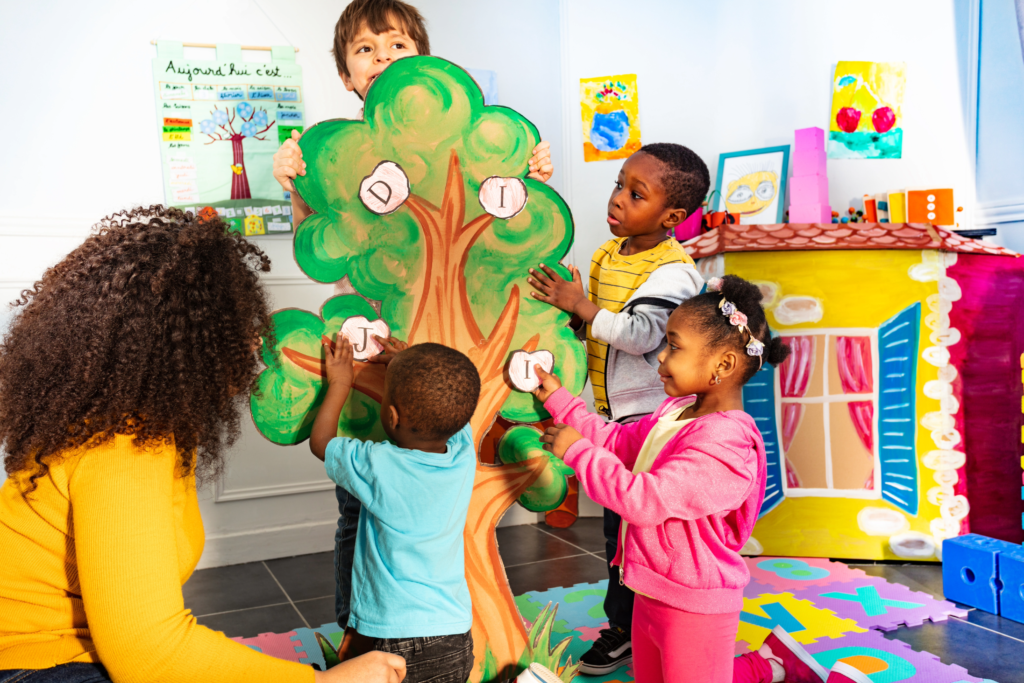
Whenever possible, print should be hung at a child’s eye level in classrooms, hallways, and throughout the rest of the school and be written in the home languages of all children in the classroom.
Play centers offer especially rich opportunities. A pretend restaurant might include menus and order pads. A grocery store might feature product labels and shopping lists. Educators can model print awareness by pointing to words, running a finger beneath text while reading, and drawing attention to recognizable logos or names.
Mailboxes labeled with children’s names invite authentic written communication. Classroom newsletters co-created with children demonstrate that print carries messages beyond the classroom.
Throughout the day, educators can narrate and think aloud whenever print appears—on clothing, signs, doors, or playground equipment—making visible the connection between spoken language and written words.
Why Print Concepts Matter
Print concepts are not isolated skills. They form the bridge between oral language and literacy. When children understand that print carries meaning, follows predictable patterns, and represents spoken language, they are prepared to engage with the alphabetic principle and, eventually, fluent reading.
By intentionally making print visible, interactive, and meaningful in preschool classrooms, educators lay essential groundwork for lifelong literacy.
Sources:
- Developing Early Literacy: Report of the National Early Literacy Panel: A Scientific Synthesis of Early Literacy Development and Implications for Interventions.
- Explaining Phonics Instruction: An Educator’s Guide
- Nevills, Pamela, and Wolfe, Patricia. Building the Reading Brain, PreK–3, p. 68. Thousand Oaks, CA: Corwin Press, 2008.
- Literacy Learning
- Learning About Print in Preschool: Working with Letters, Words, and Beginning Links with Phonemic Awareness by Dorothy S. Strickland and Judith A. Schickedanz.
Related Reading:
Developing the Big 5 Early Literacy Skills: Oral Language
Early Childhood Strategies to Support Oral Language and Vocabulary
Developing the Big 5 Early Literacy Skills: Phonological Awareness—Part 1
Developing the Big 5 Early Literacy Skills: Phonological Awareness—Part 2
Early Childhood Solutions
We offer an array of flexible, developmentally appropriate, and play-rich early childhood learning solutions to meet your unique needs.