A Proven, Playful Curriculum for Preschool and PreK
Every Child Ready is a comprehensive curriculum for preschool and Pre-K classrooms that blends purposeful play, targeted instruction, and family engagement. Available in English and Spanish and designed to be flexible and customizable, Every Child Ready gives educators everything they need to launch, teach, and measure success—so every child enters kindergarten prepared to thrive.
A proven solution, Every Child Ready is changing early learning outcomes nationwide. In classrooms using Every Child Ready, 89% of children are kindergarten-ready — nearly double the national average.
Our Approach
The Every Child Ready curriculum is customizable based on your needs and includes four components: Where to Start, What to Teach, How to Teach, and How to Measure Success.
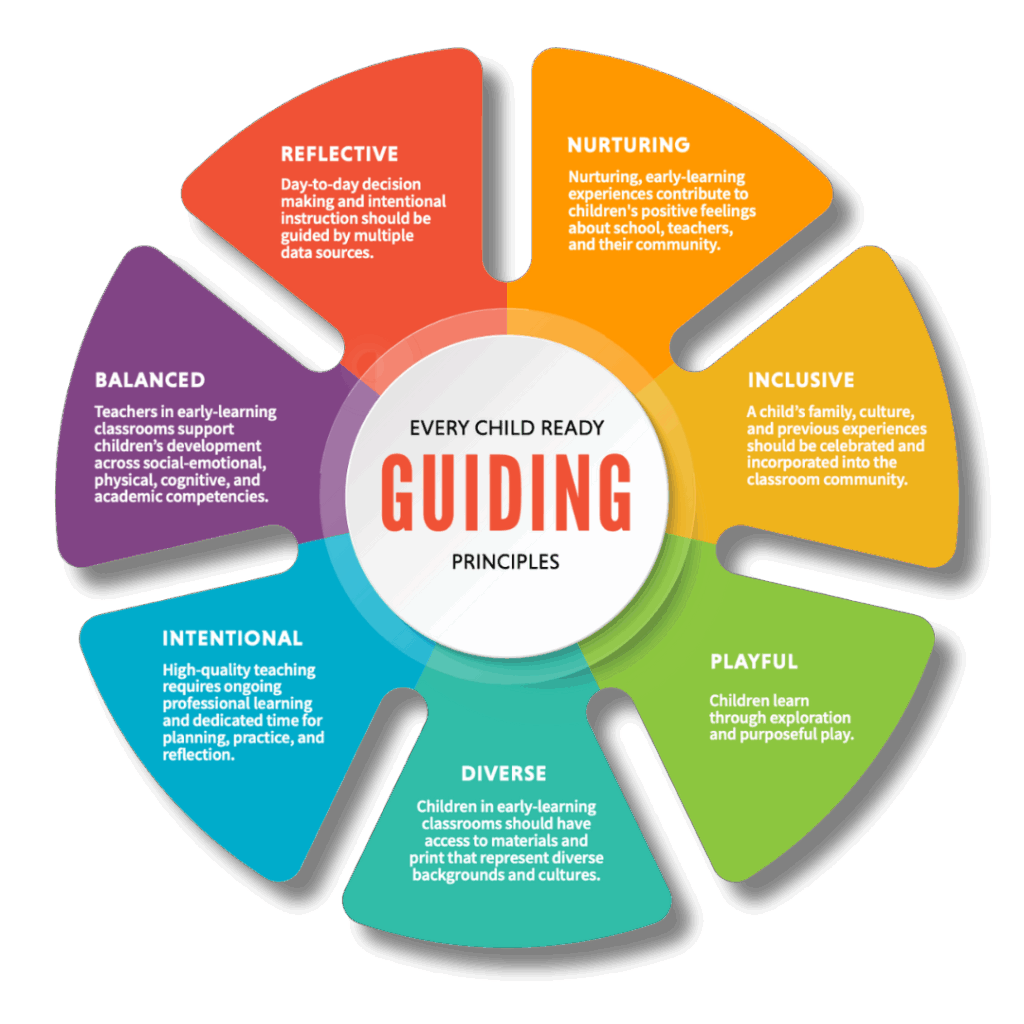
We believe that early childhood classrooms should be engaging, intentional, and playful. The Every Child Ready instructional model is rooted in seven guiding principles. These guiding principles establish a foundation for development, implementation, and decision-making that values the knowledge, needs, and experiences of children, families, teachers, and leaders.
Two-Year Scope and Sequence
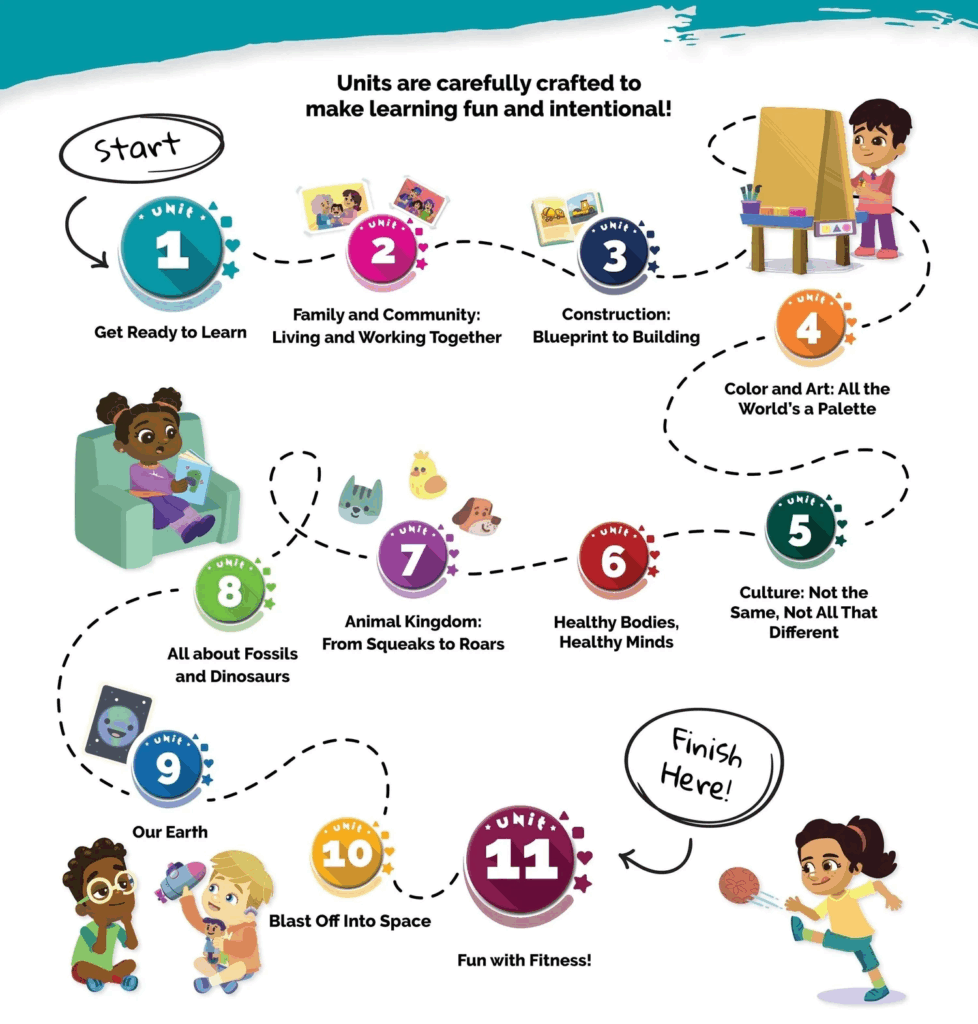
The Every Child Ready curriculum spans two years, with differentiated content for preschool and pre-kindergarten (PK3 and PK4) classrooms.
Available in both Spanish and English, Every Child Ready provides 11 thematic units that are rich, playful, and engaging and cover all domains of learning. Each unit is four weeks long and includes:
- Essential questions
- High-quality, diverse children’s literature
- Unit vocabulary
- Prefilled, weekly lesson grids
- Scripted lessons for each component of the day
- Picture word cards
- Reproducibles
11 Engaging and Playful Units
The 11 engaging and playful units feature a diverse collection of children’s books that reflect various cultures and experiences, promoting language development, critical thinking, and social-emotional growth. Units covers topics like family, art, animals, and space, creating hands-on, interactive learning experiences that support holistic child development.
8 Key Components of the Day
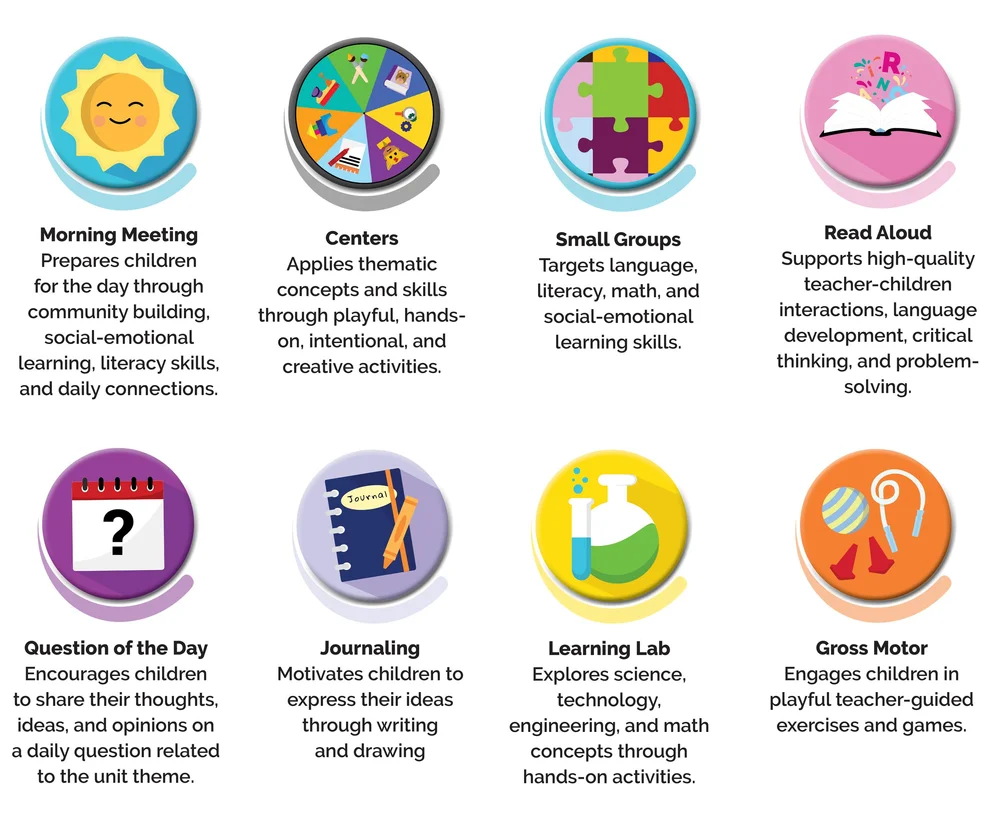
The Every Child Ready daily schedule is structured around key components that balance academic and social-emotional learning through playful, hands-on activities. The schedule is designed to integrate all domains of learning seamlessly, providing a well-rounded, engaging learning experience.
Explore Every Child Ready’s Thematic Units
Unit 1: Get Ready to Learn
Get Ready to Learn helps children adjust to their classroom and build relationships with classmates by learning routines, expectations, and engaging in social-emotional activities. They’ll explore foundational skills, like identifying emotions and practicing self-regulation, to support a sense of belonging. Through weekly lessons, children develop comfort and confidence in their classroom community, setting a positive tone for the school year.
Unit 2: Family and Community
Family and Community introduces children to the roles and responsibilities of families and community members. They’ll learn about family tasks like caring for pets and explore community helpers and their contributions. Through stories and activities, children will connect personal experiences with the roles of families and community, while building self-awareness and understanding their emotions in different situations.
Unit 3: Construction: Blueprint to Building
Construction: Blueprint to Building, children explore the building process, construction workers, and tools. They’ll start with a blueprint and end with a completed structure. Along the way, children learn about the roles of builders and the tools they use for different tasks. This unit also supports social-emotional growth, with children practicing preferred calming strategies to manage big feelings, frustrations, and problem-solving challenges.
Unit 4: Color & Art: All the World’s a Palette
Color and Art: All the World’s a Palette invites children to explore the world of artists and artwork. They’ll learn about artists’ tools, types of art, and the primary, secondary, and tertiary colors. Children will use different art mediums to express themselves, discover the basic properties of light, and observe the beauty of rainbows. This unit also introduces empathy as children notice similarities and differences and learn ways to help others.
Unit 5: Culture: Not the Same, Not All that Different
Culture: Not the Same, Not All That Different allows children to explore the concept of culture. They’ll learn about the five core characteristics of culture and how cultures can be similar and different. This unit emphasizes respect for differences, teaching children to use kind words and help others. Children will practice including others in play and gain insights through celebrations, folktales, and the unique features of different continents.
Unit 6: Healthy Bodies, Healthy Minds
Healthy Bodies, Healthy Minds engages children in learning about the human body and healthy habits. They’ll explore body parts, the digestive and muscular systems, and practices like exercise, nutrition, and dental care. This unit highlights the roles of doctors and dentists in keeping us healthy. Children will develop cooperative play skills like taking turns and trading and will learn important safety practices for their bodies, including bike and pedestrian safety.
Unit 7: Animal Kingdom: From Squeaks to Roars
Animal Kingdom: From Squeaks to Roars, brings children into the animal world and their various habitats, including temperate forests, rainforests, oceans, and ponds. They’ll observe life cycles firsthand as mealworms transform into beetles and learn about advocating for endangered animals. Throughout the unit, children will practice independence in tasks and use positive self-talk to handle challenges, building confidence and resilience.
Unit 8: All about Fossils and Dinosaurs
All About Fossils and Dinosaurs invites children to explore soil, fossils, paleontologists, and dinosaurs! They’ll discover types of dinosaurs, their diets, and how paleontologists work by digging for and caring for fossils. Through engaging in developmentally appropriate activities about life cycles and the passage of time, children will build an understanding of nature’s history and practice handling challenges with resilience and curiosity.
Unit 9: Our Earth
Our Earth introduces children to plant life cycles, geography, conservation, and climate. They’ll learn about different landforms, explore maps, and practice navigation skills. Children will also engage in conservation by exploring recycling and reducing waste. Finally, they’ll pretend to be weather forecasters to understand the effects of weather and seasons.
Unit 10: Blast Off Into Space
Blast Off Into Space takes children on an exploration of the night sky, astronauts, gravity, and shadows. They’ll learn about moon phases, constellations, and the surface of the moon. Children will discover planets, comets, and asteroids through activities, and even complete “astronaut training.” They’ll also explore shadows using natural and artificial light sources.
Unit 11: Fun with Fitness
Fun with Fitness introduces children to sports, games, and activities like baseball, tennis, and swimming. They’ll learn about teamwork and sportsmanship by cheering each other on. Children will also discuss summer safety practices, like bike safety and proper stretching techniques. Finally, they’ll explore the Olympics, celebrating sports from around the world.
Support For All Learners
Every Child Ready uses a Multi-Tiered System of Support to aid all learners. The instructional model includes several resources:
- Multilingual Learner Supports: Supports multilingual learners with targeted small group intervention language plans in English and Spanish. Every Child Ready lessons include multiple modalities, explicit vocabulary instruction, visuals, and modeling techniques to enhance learning.
- Interventions: The Flexible Small Group program provides targeted intervention lessons to address specific skill areas and can be used for children who need extra support.
- Speech and Articulation: Every Child Ready’s articulation screener identifies speech sounds for targeted support. The articulation small group lesson plans intervene with accuracy to promote development.
Transadapted into Spanish
Every Child Ready content is fully transadapated into Spanish. This means that the curriculum is not only translated, but also modified to fit cultural, social, and contextual differences. Content in both English and Spanish allows schools to use Every Child Ready’s instructional materials to meet the needs of any bilingual model.
Standards-Based, Flexible Small Groups
Every Child Ready’s Flexible Small Group program aligns with essential learning standards, providing teachers with targeted lessons in math, language and literacy, and social-emotional learning.
By leveraging teacher-collected data, it strategically groups children based on their unique needs and abilities. With differentiated lessons and embedded checks for understanding, the program ensures personalized instruction that meets the diverse needs of every child.
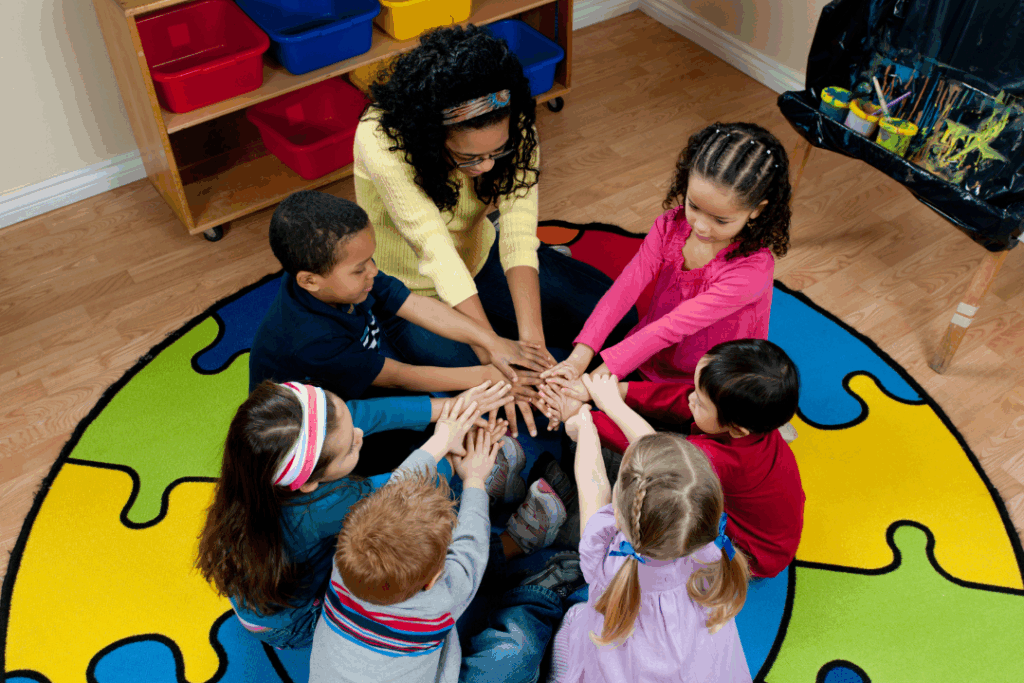
Aligned with the Science of Reading
Our evidence-based approach includes instructional strategies that align with the science of reading to teach children foundational skills and build on their cultural and personal experiences, leading to later reading success. The Every Child Ready curriculum explicitly teaches, embeds, and reinforces foundational skills, knowledge, and executive functioning.
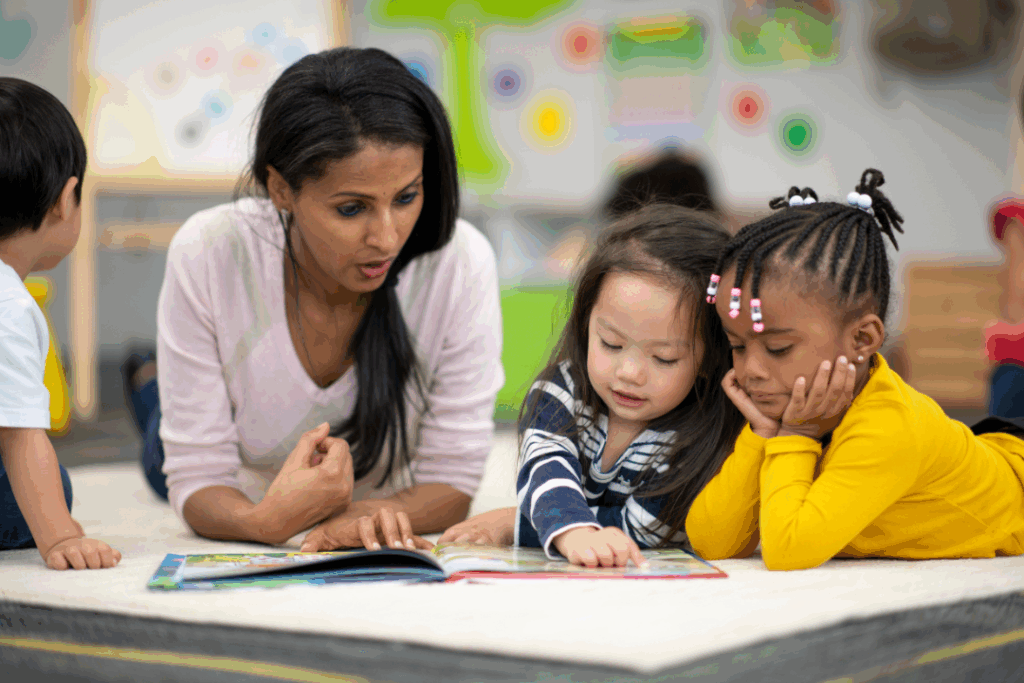
Aligned with Being a Reader, K–5
The Every Child Ready curriculum is designed to build the foundational skills students need before entering Being a Reader’s kindergarten instruction. Every Child Ready and Being a Reader align in their core pedagogical values, commitment to standards and the Science of Reading, balanced attention to academic and social goals, use of authentic trade books, and consistent instructional structures such as whole-class, small-group, and center-based learning.

Speak With a Program Expert
Dedicated early childhood expert Emily Grunt supports our school, district, and community partners in developing high-impact solutions for our youngest learners. Send Emily a message or use the calendar below to schedule a meeting.
Early Childhood Solutions from Collaborative Classroom
No two classrooms are the same—that’s why we offer an array of flexible, developmentally appropriate, and play-rich early childhood learning solutions to meet your unique needs.