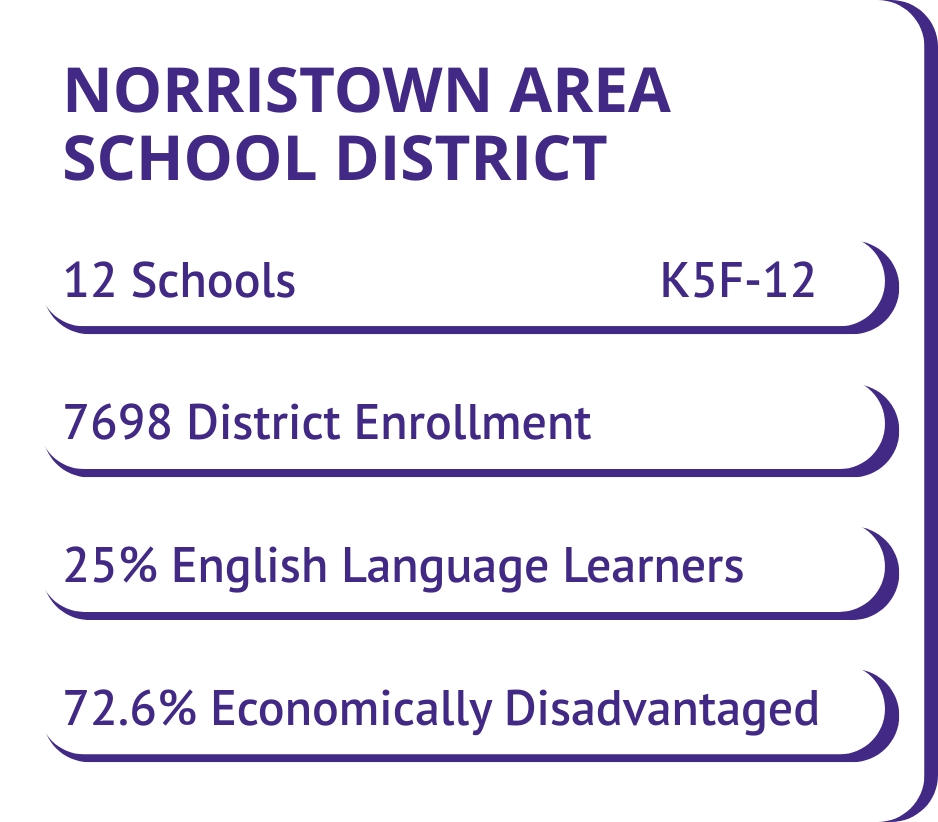
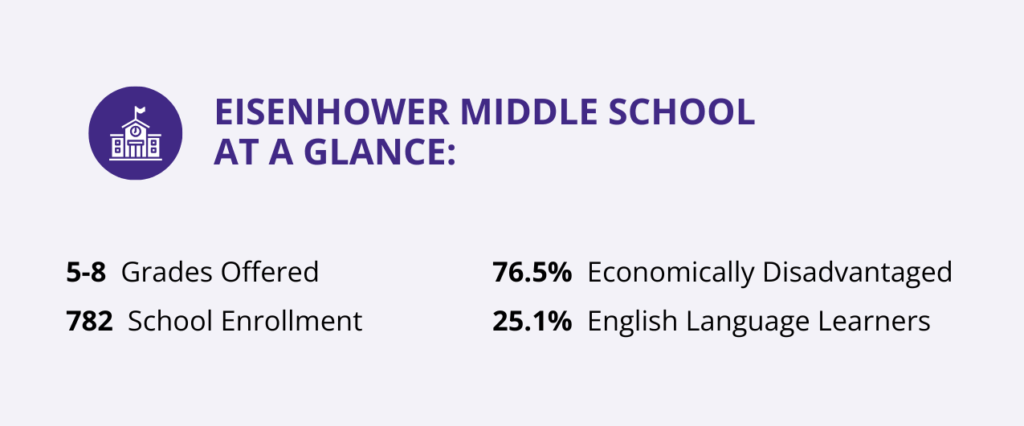
Eisenhower Science and Technology Leadership Academy is a diverse community in the Norristown Area School District, serving more than 850 students across grades five through eight. The school serves a large population of Spanish-speaking students and eleven self-contained special education classrooms, alongside robust learning-support services. Eisenhower launched its first year of targeted reading intervention in 2024–25.
Using beginning-of-year data, the district identified students in grades three through eight—with and without IEPs or ELD classifications—who needed additional reading intervention.
Reading Specialist Molly Goldstein supports these learners who need foundational skill support with a dedicated WIN (What I Need) period and SIPPS®.
In this blog, Molly shares how SIPPS has transformed instruction, enhanced collaboration, and improved student confidence across the entire Eisenhower school community.
Can you describe whom you support and what SIPPS implementation looks like at Eisenhower?
I support students in grades five and six who need reading intervention, as illustrated by beginning-of-year data. These aren’t necessarily students with special education diagnoses or ELD classifications—just students needing extra support.
I have two groups of fifth graders and one group of sixth graders. All of them are working in SIPPS Plus, but at different entry points. These students actually started SIPPS when we began implementing the program districtwide in the 2024–25 school year. Our fifth graders received SIPPS in fourth grade, so I was able to collaborate with the elementary reading specialist to continue their services. We began the year by stepping back about ten lessons, and those students are now doing a really great job. The sixth graders also received instruction here at the middle school last year.
What was your school community like prior to implementing SIPPS?
We didn’t have Reading Specialists or targeted reading interventions in Eisenhower before last school year. The 2024–25 school year was the first time we had dedicated reading intervention within a structured WIN time.
Having SIPPS has been a wonderful opportunity for our general-education teachers to shine a light on students’ actual skill levels and understand the frustration a student might feel as they endeavor to strengthen their foundational literacy skills. They can see that classroom misbehaviors are not acts of defiance or disengagement; these students simply haven’t received the instruction they need. Now we can support them. I’ve seen a huge impact in just eighteen months.
How would you describe the Eisenhower school community now that SIPPS and WIN are in place?
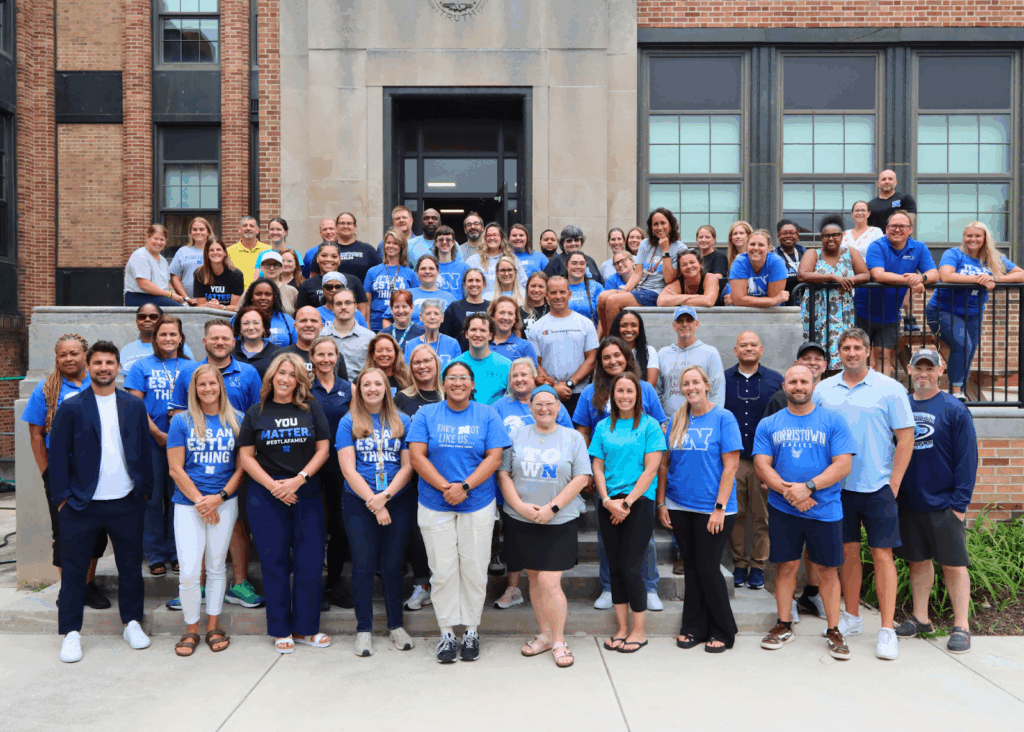
The culture has shifted for students and staff to one that is more student-centered, open, and transparent about data.
We place students in groups based on their individual data, which they know and understand because we’re very open about it. WIN truly means What I Need. Students receive the support that’s right for them, without stigma or judgment. No one is defining students by deficits. Everyone holds WIN in high esteem.
WIN is never skipped because reading intervention is held in such high regard. Dr. Taylor, our principal, has done a great job stressing the importance of this, and it has become a non-negotiable.
What was the SIPPS implementation process like?
Overall, it’s been great. I have a structured literacy background, so picking up SIPPS felt natural to me. We typically address phonemic awareness, phonics, or high-frequency word routines in elementary school, so not all of our middle school teachers have experience using those strategies.
So there were a few bumps along the way, but teachers quickly saw the benefit. They were able to see how invaluable this time is and what SIPPS allows us to provide to students.
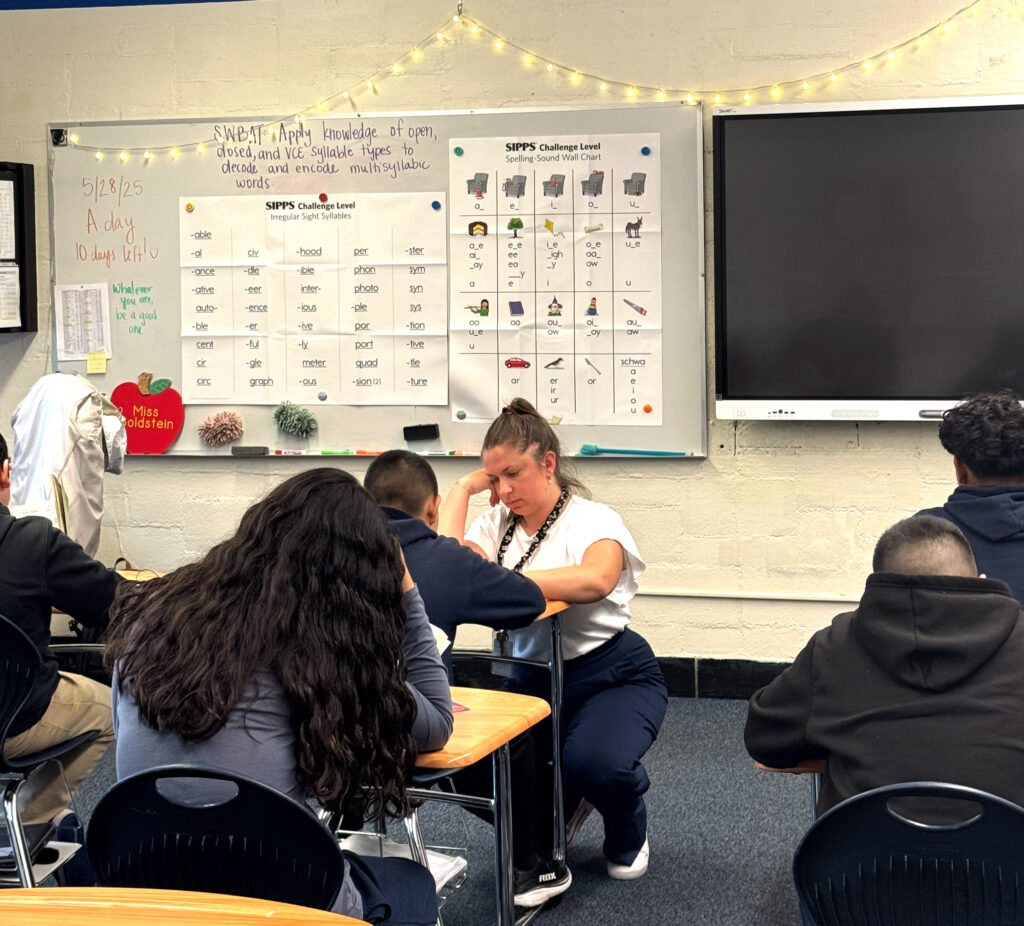
This year, we had fifteen groups up and running by the third week of school. Instruction is smooth, routines have stuck, and students and teachers remembered what to do. We put a lot of work in early on, and it’s absolutely paid off.
What changes have you noticed in your students since teaching with SIPPS?
I see students using SIPPS strategies all over the building. I see them carrying their high-frequency word dictionaries, sounding out words, and approaching reading without fear. They no longer see reading as something overwhelmingly difficult.
I see students putting dots in multisyllabic words and pulling out their dictionaries. There’s so much confidence when students are taught at their instructional level. It’s amazing to watch them walk into grade-level classes feeling more confident and capable.
What have you noticed about student engagement during SIPPS?
A huge part of our routine at Eisenhower is that 100% of students participate 100% of the time. That expectation alone becomes a classroom-management structure. When everyone is involved, there’s no room for anything else, and the thirty minutes fly by.
Here’s a story from the first week of school:
I had a fifth grader using a sock as an eraser during Guided Spelling. While high-level administrators were in my room, he turned the sock into a sock puppet—but he was participating beautifully. So I said, “Remember, I need to hear ten voices and a sock puppet.” He never took the puppet off and stayed engaged the whole time!

How has SIPPS influenced your own teaching and learning?
SIPPS has made me much more intentional about using precise language. Other intervention programs sometimes allow more freedom, and it can be tempting to add more, but SIPPS has shown me the power of simplicity—keeping my language tight and letting kids do the work.
I’m more of a guide. I give students the tools, but the work is their own. The consistent routines create a safe space. They know what to expect each day, and they know the corrective routines won’t embarrass them. That predictability is powerful.
What do you especially love about being a Reading Specialist at Eisenhower?
I love the lightbulb moments—when a student suddenly gets it. I’ve seen the moment where a student realizes, “Now I can read.” I’ve seen the moment they figure out a word, and watching their confidence grow is what makes the hard, busy, crazy days worth it. That is absolutely my favorite part of this job.
What advice would you give an educator wondering whether SIPPS might help their striving readers?
Be realistic—and use Dreams on Wheels! Those books and pictures are so engaging for kids and help build confidence.
Also:
- Stick to the script
- Observe others and let others observe you
- Collaborate with your colleagues
- And most important—keep going!
Related Reading:
How Age-Appropriate Texts Help Older Striving Readers Succeed